
What is wall breaker BLDC Motor?
Here's what it means and why it's called that:
-
The "Wall Breaker" Analogy:
-
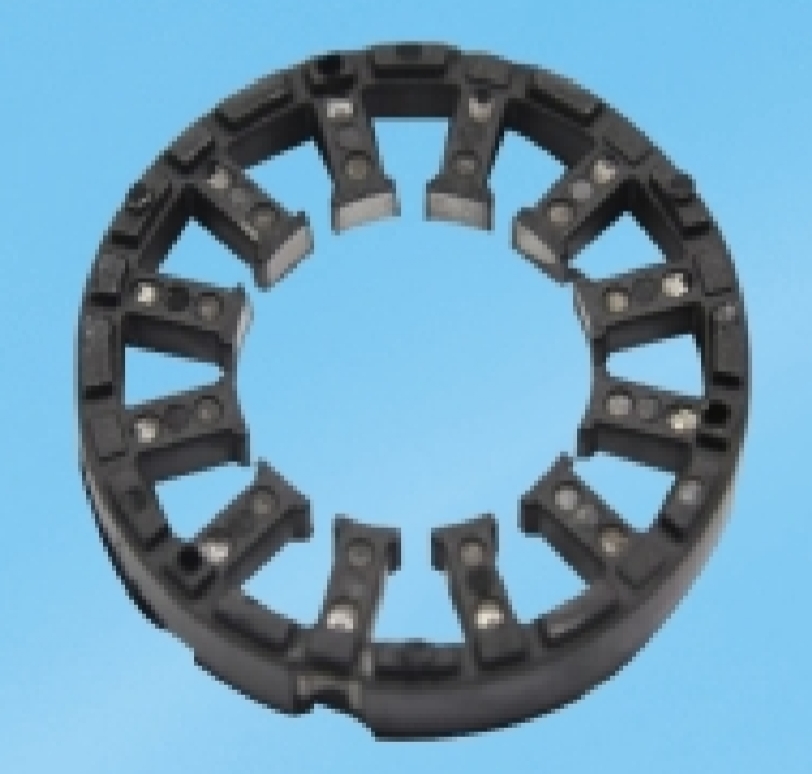
Traditional BLDC motors have a solid, continuous stator core made from stacked laminations. This core looks like a solid ring or "wall" with slots cut into it for the windings.
-
In a "wall breaker" design, this solid stator ring is broken up into individual teeth or segments. Each stator tooth (or a small group of teeth) becomes a separate, modular piece. These segments are then arranged in a ring around the rotor, effectively "breaking the wall" of the traditional stator.
-
-
Key Features of Segmented Stator BLDC Motors:
-
Modular Teeth/Segments: The stator core is made of many individual teeth pieces (often "U-shaped," "T-shaped," or "I-shaped" laminations) instead of one solid piece.
-
Pre-Wound Coils: Coils are wound around each individual tooth segment before the stator is assembled. This is a major advantage over traditional designs where coils must be inserted into the tight slots of a pre-assembled solid stator core.
-
Assembled Ring: The pre-wound tooth segments are then precisely arranged and held together (often with a structural ring or housing) to form the complete stator assembly.
-
-
Advantages (Why "Break the Wall"?):
-
Higher Slot Fill Factor: Pre-winding coils on individual teeth allows for much tighter packing of copper wire into the slot space. This significantly increases the slot fill factor (often 20-30% higher than traditional stators).
-
Increased Power Density & Torque: More copper in the same space means higher efficiency and greater torque output for a given motor size.
-
Improved Cooling: The segmentation often creates natural air gaps between the tooth segments, improving heat dissipation from the windings.
-
Simplified Manufacturing & Automation: Pre-winding individual teeth is often easier to automate than inserting coils into a tight stator slot. It can reduce labor costs and complexity.
-
Reduced Copper Waste: Precisely wound coils for each tooth minimize wasted copper wire.
-
Design Flexibility: Easier to implement complex winding patterns (e.g., concentrated windings) and optimize tooth geometry.
-
-
Disadvantages:
-
Increased Mechanical Complexity: Assembling and aligning many small segments requires precise tooling and can be complex.
-
Potential for Higher Vibration/Noise: Mechanical interfaces between segments could be a source of vibration or noise if not perfectly manufactured and assembled.
-
Higher Core Losses (Potential): The joints between segments can create small air gaps in the magnetic path, potentially increasing core losses (though good design minimizes this).
-
Structural Rigidity: The assembled segmented stator might be less rigid than a solid one-piece stator, requiring careful structural design.
-
-
Common Applications:
-
High-performance electric vehicles (EVs, e-bikes, scooters)
-
Drones (UAVs) requiring high power-to-weight ratios
-
High-speed industrial motors (spindles, pumps, compressors)
-
Robotics
-
Aerospace applications
-
Any application demanding compact size, high efficiency, and high torque density.
-
In Summary:
A "wall breaker BLDC motor" is a segmented stator BLDC motor. The name comes from replacing the traditional solid, "wall-like" stator core with an assembly of individual, pre-wound tooth segments. This design breakthrough offers significant advantages in power density, efficiency, and manufacturability, making it increasingly popular for demanding applications. It's a specific construction method for the stator, not a fundamentally different type of BLDC motor principle.
Why BLDC Motor is important for wall breaker?
How to make solar panel cleaning robot BLDC Motor?
Related Article


