
How to make toothbrush BLDC Motor?
However, understanding the key steps and challenges involved provides insight into why these motors are sophisticated components:
Phase 1: Design & Engineering
-
Requirements Definition:
-
Target performance: Speed (e.g., 8,000 - 40,000+ oscillations/min), torque, power consumption.
-
Physical size constraints (diameter, length).
-
Voltage (typically 1.2V - 3.7V from NiMH/Li-ion batteries).
-
Efficiency targets for long battery life.
-
Noise/vibration limits.
-
Waterproofing (IPX7 standard).
-
Cost targets.
-
-
Motor Topology Selection:
-
Choose between Outrunner (magnets on outer rotor spinning around inner stator - common) or Inrunner (stator outside, rotor inside).
-
Determine number of stator poles and magnet poles (e.g., 3-phase, 2-pole magnet rotor common).
-
-
Electromagnetic Design:
-
Use Finite Element Analysis (FEA) software for simulation.
-
Optimize magnet shape/size/grade (e.g., Neodymium).
-
Design stator lamination shape for efficient magnetic flux.
-
Calculate winding specifications (wire gauge, number of turns, pattern - often concentrated windings).
-
-
Mechanical Design:
-
Material selection (stator laminations, magnet holder, shaft, bearings).
-
Rotor balancing for low vibration.
-
Shaft coupling design to transfer motion to brush head mechanism.
-
Sealing design for waterproofing.
-
-
Controller Design:
-
Microcontroller (MCU) selection.
-
Gate driver circuit for MOSFETs/Transistors.
-
Position sensing method (Sensorless - Back-EMF detection is dominant for cost/size).
-
Power management and battery charging circuit integration.
-
Firmware development for commutation, speed control, mode switching, safety features.
-
Phase 2: Component Manufacturing (Highly Specialized)
-
Stator:
-
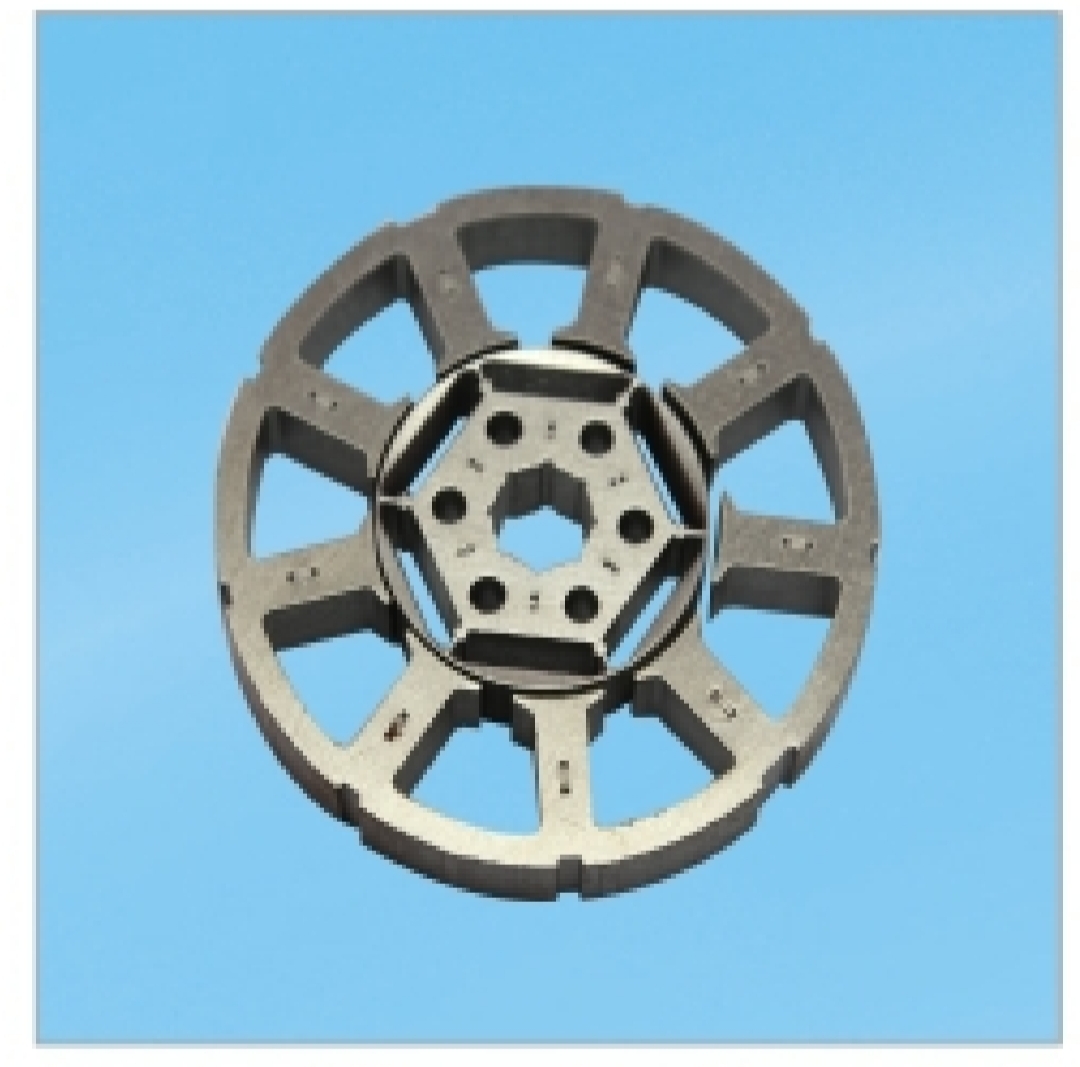
Laminations: Thin electrical steel stamped into precise shapes, stacked, and bonded/varnished.
-
Winding: Ultra-fine enameled copper wire (often < 0.1mm diameter) is automatically wound onto stator teeth with extreme precision. Insulation is critical.
-
Termination: Wires connected to terminals or PCB.
-
-
Rotor:
-
Magnet Assembly: Tiny neodymium magnets precisely magnetized and bonded into a ring or holder (often plastic overmolded).
-
Shaft: Precision-ground stainless steel shaft pressed into rotor core.
-
Balancing: Rotor dynamically balanced at high RPM.
-
-
Controller PCB:
-
Surface-Mount Technology (SMT) assembly of MCU, MOSFETs, drivers, passives.
-
Firmware programming and testing.
-
Potting/Conformal Coating for waterproofing and vibration resistance.
-
-
Bearings & Seals:
-
Miniature stainless steel or ceramic ball bearings.
-
Custom lip seals or O-rings for shaft waterproofing.
-
Phase 3: Assembly & Integration (High Precision Automation)
-
Stator Mounting: Secured rigidly within the toothbrush handle housing.
-
Rotor Insertion: Precisely aligned within stator air gap.
-
Bearing Pressing: Bearings pressed into housing ends to support shaft.
-
Seal Installation: Critical waterproof seals installed.
-
PCB Connection: Controller wired to motor windings and battery.
-
Encapsulation/Sealing: Motor compartment sealed (laser welding, ultrasonic welding, epoxy) to achieve IPX7 rating.
Phase 4: Testing & Calibration
-
Electrical Tests: Continuity, insulation resistance, winding resistance.
-
Performance Tests: Speed vs. torque curves, power consumption, efficiency.
-
Functional Tests: Startup reliability, mode switching, load performance.
-
Waterproof Testing: Submersion tests.
-
Lifetime Testing: Accelerated aging under load/vibration.
-
Noise & Vibration Testing: Acoustic and vibration profiling.
-
Firmware Calibration: Fine-tuning control parameters.
Major Challenges in Toothbrush BLDC Motor Production
-
Extreme Miniaturization: Fitting powerful components into a ~5-10mm diameter space.
-
Ultra-Low Voltage & High Efficiency: Operating efficiently at 1-2V under load is difficult.
-
Precision Manufacturing: Tolerances measured in microns.
-
Mass Production Automation: Requires highly specialized, high-precision assembly robots.
-
Waterproofing: Ensuring seals survive years of daily use in wet environments.
-
Sensorless Control Reliability: Must start reliably and run smoothly under varying loads without position sensors.
-
Cost: Achieving performance and reliability at consumer product price points.
In Summary: Making a toothbrush BLDC motor is a feat of precision engineering and advanced manufacturing. It involves designing ultra-compact electromagnetic systems, manufacturing micro-components, integrating sophisticated electronics, achieving waterproof sealing, and rigorous testing – all optimized for mass production. This complexity is why toothbrush companies rely on specialized motor manufacturers and extensive R&D teams rather than DIY approaches. If you're interested in principles, experimenting with larger hobby BLDC motor kits is possible, but replicating a toothbrush motor is far beyond home capabilities.
What is hair dryer BLDC Motor?
Why BLDC Motor is important for toothbrush?
Related Article


