
Why Gimbal Motor is important in BLDC Motor classification?
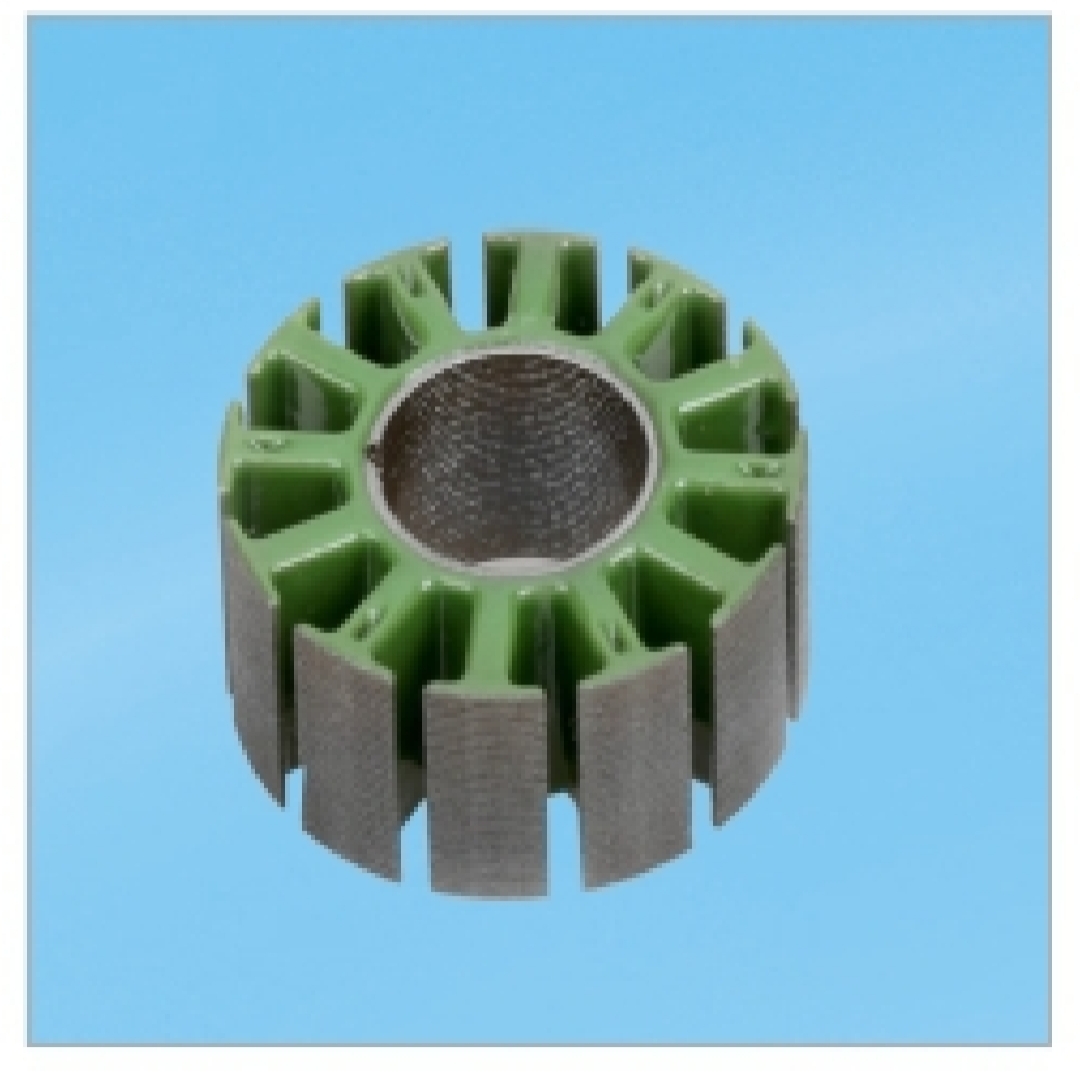
Here's why they matter:
1. Challenges Traditional BLDC Classification
BLDC motors are typically classified by:
-
Rotor position (Inrunner/Outrunner)
-
Winding topology (Trapezoidal vs. Sinusoidal)
-
Sensor type (Sensored/Sensorless)
Gimbal motors transcend these categories, forcing a performance-based classification focused on:
→ Torque smoothness (cogging torque <0.5%)
→ Control granularity (sub-1° precision)
→ Vibration metrics (near-zero RMS jitter)
2. Reveals Fundamental Design Trade-Offs
Gimbal motors prioritize characteristics opposite to mainstream BLDC applications:
| Parameter | Standard BLDC | Gimbal BLDC |
|---|---|---|
| Primary Goal | High RPM / Power | Torque Smoothness |
| KV Range | 500–10,000 RPM/V | 30–150 RPM/V |
| Pole Count | 4–12 poles | 14–22+ poles |
| Cogging Torque | Tolerable | Near-zero (<0.02 Nm) |
| Efficiency Peak | 85–95% | 60–80% (sacrificed for smoothness) |
3. Drives Control Algorithm Innovation
Gimbal motors enabled breakthroughs in sensorless FOC (Field-Oriented Control):
-
Operate smoothly at near-zero RPM (<1 RPM)
-
Achieve torque accuracy rivaling servo motors
-
Eliminate Hall sensors, reducing cost/size
This forced control engineers to rethink BLDC limitations.
4. Expands BLDC Application Boundaries
By solving low-speed jitter and cogging, gimbal motors unlocked new use cases:
-
Cinematic cameras: 3-axis stabilization (e.g., DJI RS4)
-
Medical robotics: Vibration-free surgical arms
-
Astrophotography: Sub-arcsecond telescope tracking
-
Industrial automation: Precision glue dispensing
5. Highlights Material Science Advances
Achieving gimbal-grade performance requires:
-
Specialized magnets: Halbach arrays for uniform flux
-
Skewed stators: 10–15° skew to cancel cogging harmonics
-
Coreless designs: Removing iron laminations to eliminate hysteresis losses
Why This Matters for Classification
Gimbal motors prove that BLDC performance isn't monolithic. They demand a subclass defined by:
-
Application: Vibration-sensitive precision control
-
Metrics: Cogging torque, torque ripple, control bandwidth
-
Topology: High-pole outrunners with FOC compatibility
This specialization is so distinct that engineers now specify "gimbal-grade BLDC" as a functional category – effectively creating a new tier in BLDC taxonomy based on motion quality rather than raw power or speed.
In essence: Gimbal motors expose that traditional BLDC classifications (like inrunner/outrunner) are insufficient to describe performance in high-fidelity applications. They force us to classify motors by how they behave under control, not just how they’re constructed.
How to make Gimbal Motor in BLDC Motor classification?
What is Gimbal Motor in BLDC Motor classification?
Related Article


