
How to make humidifier BLDC Motor?
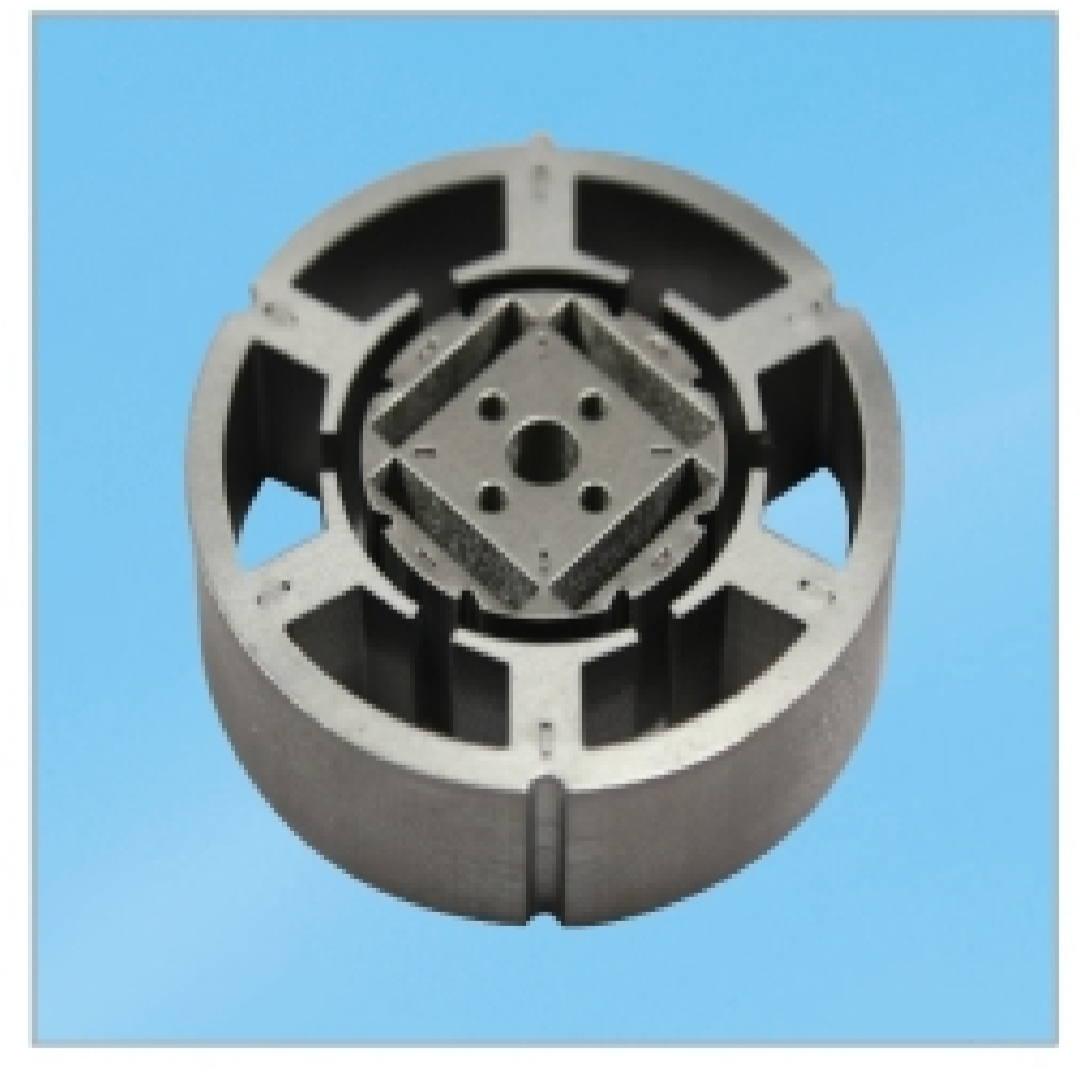
Here's a breakdown:
Core Components of a Humidifier BLDC Motor System:
-
Stator: The stationary part containing copper windings arranged in phases (typically 3-phase). These windings create a rotating magnetic field when energized in sequence.
-
Rotor: The rotating part containing permanent magnets (usually high-strength Neodymium magnets). The magnetic field of the rotor interacts with the stator's field to produce torque.
-
Sensors (or Sensorless Control): Most modern motors use Hall Effect sensors embedded in the stator to detect the rotor's position. This information is critical for the controller to energize the correct windings at the right time. Advanced "sensorless" controllers use the motor's back-EMF to determine position but require specific algorithms.
-
Electronic Speed Controller (ESC): This is the brain. It:
-
Takes DC input power (often converted from AC mains).
-
Uses rotor position feedback (from sensors or back-EMF).
-
Precisely switches current through the stator windings using power transistors (MOSFETs).
-
Implements the control algorithm (e.g., trapezoidal or sinusoidal commutation).
-
Handles speed commands (from user input, humidistat, or microcontroller).
-
Provides protection (over-current, over-voltage, over-temperature).
-
-
Shaft & Bearings: The rotor shaft transmits torque to the fan/impeller. High-quality, often sealed, bearings ensure smooth, quiet, and long-lasting rotation.
-
Housing: Protects the internal components, provides mounting points, and may aid in heat dissipation. Crucially for humidifiers, it must be designed for moisture resistance.
Key Steps in Professional Manufacturing (Simplified Overview):
-
Design & Simulation:
-
Define requirements: Power, torque, speed range, voltage, size, noise level, efficiency target, cost.
-
Electromagnetic design: Optimize stator core (laminations), winding pattern, magnet type/size/placement.
-
Thermal design: Ensure heat dissipation is adequate.
-
Mechanical design: Housing, shaft, bearings, integration with fan.
-
Controller design: Circuitry, component selection, control algorithm.
-
Extensive simulation using specialized software (e.g., ANSYS Maxwell, Motor-CAD).
-
-
Stator Fabrication:
-
Lamination Stacking: Thin steel laminations (to reduce eddy currents) are stamped and precisely stacked/glued.
-
Winding: Copper wire is precisely wound onto the stator teeth using automated winding machines. Insulation is critical.
-
Termination: Wire ends are connected to terminals.
-
-
Rotor Fabrication:
-
Core Manufacturing: Steel laminations or a solid core is produced.
-
Magnet Mounting: High-strength magnets are precisely glued and/or mechanically secured onto the rotor core. Magnetization often happens after mounting.
-
-
Shaft & Bearing Assembly:
-
Precision shaft machining.
-
Pressing bearings into housings or onto the shaft.
-
-
Controller (ESC) Fabrication:
-
PCB Design & Layout.
-
Component Sourcing (MOSFETs, microcontroller, gate drivers, capacitors, Hall sensors if used).
-
PCB Assembly (SMT and through-hole soldering).
-
Firmware Programming: Control algorithms, communication protocols, protection logic.
-
-
Final Motor Assembly:
-
Installing the stator into the housing.
-
Pressing/sliding the rotor assembly with bearings into place.
-
Installing sensors (if used).
-
Securing end caps/bells.
-
Connecting stator windings to the controller.
-
-
Testing & Calibration:
-
Electrical Continuity & Insulation Resistance.
-
Sensor Functionality (if used).
-
Back-EMF Measurement.
-
Performance Testing: Torque, speed, power, efficiency across the operating range.
-
Noise & Vibration Testing.
-
Thermal Testing.
-
Environmental Testing (especially moisture resistance for humidifiers).
-
Controller Calibration.
-
Burn-in Testing.
-
-
Integration with Humidifier:
-
Mechanical coupling to the fan/impeller.
-
Sealing against moisture ingress (critical!).
-
Electrical connection to power supply and control system (humidistat, main board).
-
Why You Can't Realistically "Make" One Yourself:
-
Precision Manufacturing: Requires CNC machines, stamping presses, automated winding machines, precision balancing equipment.
-
Specialized Materials: High-grade electrical steel laminations, enameled copper wire, high-strength NdFeB magnets, specialized bearings, thermally conductive plastics/metals, conformal coatings for moisture protection.
-
Complex Electronics: Designing and manufacturing a reliable, efficient ESC requires deep electrical engineering expertise and SMT manufacturing capabilities.
-
Control Algorithms: Implementing robust sensorless control or optimizing sensor-based commutation requires advanced software/firmware skills.
-
Testing Equipment: Requires expensive dynamometers, environmental chambers, oscilloscopes, power analyzers, etc.
-
Safety & Reliability: Ensuring the motor is safe (electrically and mechanically) and reliable in a high-humidity environment is paramount and requires rigorous validation.
Realistic Alternatives:
-
Select an Off-the-Shelf BLDC Motor: This is the overwhelmingly common and practical approach, even for humidifier manufacturers. Many companies specialize in manufacturing BLDC motors for specific applications (fans, pumps, appliances).
-
Look for: Motors designed for fans/blowers, with appropriate voltage/power/speed, integrated controllers (or specify one), and crucially, with an appropriate Ingress Protection (IP) rating (e.g., IP24 or higher) for moisture resistance. Specify shaft type/size for your impeller.
-
-
Modify an Existing BLDC Motor/Kit: Hobbyist BLDC motor kits exist (e.g., for drones or RC cars), but these:
-
Rarely have the necessary moisture protection.
-
May not be optimized for continuous duty like a humidifier requires.
-
Might not have the right speed/torque characteristics for moving air efficiently.
-
Lack UL/CE certification for appliance safety. Use with extreme caution and at your own risk if attempting.
-
-
Partner with a Motor Manufacturer: If you are developing a humidifier product, work with a company specializing in small appliance BLDC motors. Provide your specifications, and they will design and manufacture the motor system.
In Conclusion:
While understanding the components and manufacturing process is valuable, actually making a humidifier-grade BLDC motor from scratch is a massive industrial undertaking. The practical path is to source a suitable, pre-made, moisture-resistant BLDC motor and controller from a specialized supplier and integrate it carefully into your humidifier design, paying utmost attention to sealing against humidity.
What is electric mop BLDC Motor?
Why BLDC Motor is important for humidifier?
Related Article


