
How to make garden tool BLDC Motor?
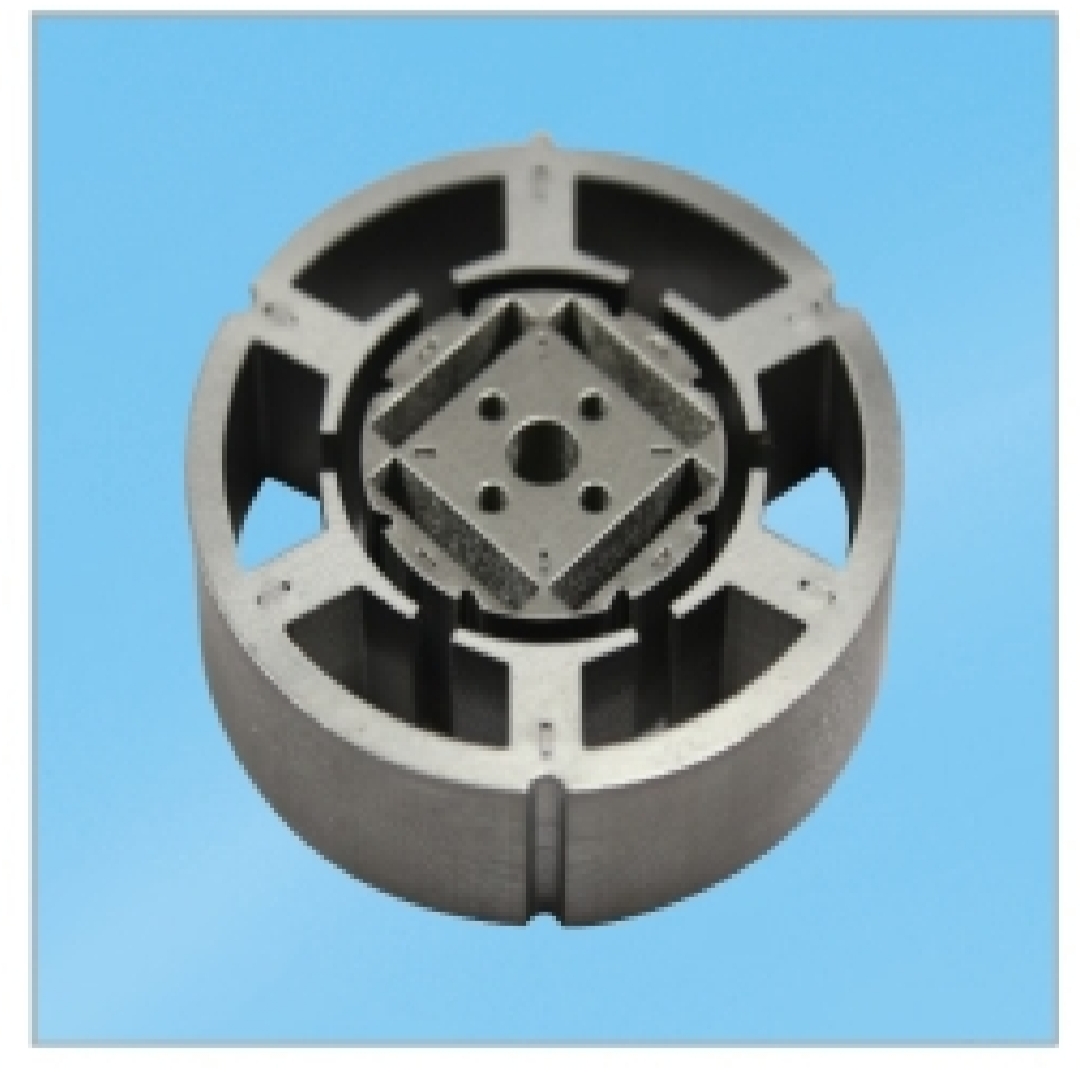
Below is a simplified overview of the key steps:
1. Core Components of a Garden Tool BLDC Motor
| Subsystem | Components |
|---|---|
| Motor | Stator, rotor (magnets), bearings, shaft, housing, sensors (Hall effect). |
| Controller | Microcontroller, MOSFETs, gate drivers, capacitors, PCB, firmware. |
| Integration | Mechanical coupling, thermal management, waterproofing, safety systems. |
2. Motor Design & Manufacturing Steps
A. Electromagnetic Design
-
Requirements: Define torque, speed, power (e.g., 500W–1500W), voltage (18V–80V), efficiency (>85%).
-
Stator Design:
-
Laminations: Laser-cut silicon steel sheets (reducing eddy currents).
-
Windings: Automated coil winding (concentrated or distributed windings).
-
-
Rotor Design:
-
Magnets: High-grade neodymium (NdFeB) glued/inserted into rotor core.
-
Pole Count: 4–8 poles (optimized for torque vs. speed).
-
B. Mechanical Design
-
Housing: Aluminum alloy (heat dissipation) or reinforced polymer (lightweight).
-
Shaft: Hardened steel, designed to handle cutting loads (e.g., mower blade torque).
-
Bearings: Sealed industrial bearings (dust/water resistance).
-
Cooling: Ribbed housing + internal fans for airflow.
C. Sensors
-
Hall Effect Sensors: 3x sensors mounted on stator (detect rotor position).
-
Sensorless Options: For cost-sensitive tools (estimates position from back-EMF).
3. Electronic Controller (The "Brain")
-
Microcontroller: ARM Cortex-M or dedicated BLDC driver IC (e.g., TI DRV830x).
-
Power Stage:
-
MOSFETs: High-current, low-Rds(on) transistors (e.g., 30A–60A rating).
-
Gate Drivers: Isolated drivers for switching MOSFETs at 15–20 kHz.
-
-
Firmware: Implements:
-
Commutation: 6-step trapezoidal or FOC (Field-Oriented Control).
-
Protections: Overcurrent, overtemperature, undervoltage lockout.
-
Features: Soft-start, variable speed, load compensation.
-
4. Integration for Garden Tools
-
Thermal Management:
-
Heat sinks on MOSFETs/stator.
-
Thermal paste + airflow channels.
-
-
Environmental Sealing:
-
IPX4/IPX5 rating (water/splash resistance).
-
Dust-proof bearing seals.
-
-
Safety Systems:
-
Deadman switch (trigger-based activation).
-
Blade-brake/clutch for mowers/chainsaws.
-
-
Mechanical Coupling:
-
Direct drive (blowers) or gear reduction (mowers/trimmers).
-
5. Manufacturing Process
-
Stator Assembly: Stack laminations → Wind coils → Impregnate with epoxy (varnish).
-
Rotor Assembly: Press-fit magnets → Dynamic balancing.
-
Controller Assembly: SMT PCB assembly → Firmware programming.
-
Final Assembly:
-
Mount bearings/shaft.
-
Integrate stator/rotor/housing.
-
Wire Hall sensors.
-
Seal housing (gaskets/epoxy).
-
-
Testing:
-
Performance: Torque-speed curves, efficiency mapping.
-
Environmental: Vibration, water spray, thermal cycling.
-
Safety: UL/CE/IEC certification (critical for commercial sale).
-
6. Key Challenges in Garden Tool BLDC Motors
| Challenge | Solution |
|---|---|
| High Torque Demand | Optimized pole/slot count + strong NdFeB magnets. |
| Heat in Confined Space | Forced airflow + aluminum housing + thermal derating. |
| Dust/Moisture Ingress | IP-rated seals + conformal coating on PCBs. |
| Cost Optimization | Sensorless control + automated manufacturing. |
| Vibration/Impact | Robust housing + overmolded components. |
7. Realistic Pathways to "Make" a BLDC Garden Tool Motor
-
For Engineers:
-
Use motor design software (e.g., Motor-CAD, ANSYS Maxwell).
-
Prototype with off-the-shelf controllers (e.g., ODrive, VESC).
-
Partner with motor factories (China, EU) for small-batch production.
-
-
For Companies:
-
Hire BLDC motor design specialists.
-
Collaborate with OEMs (e.g., Nidec, Portescap) for custom designs.
-
-
For Hobbyists:
-
Don’t build from scratch. Modify existing BLDC motors (e.g., from e-bikes/drones) + pair with open-source controllers.
-
Focus on integration (e.g., attaching a blade to a motor).
-
Conclusion
Creating a garden-tool-grade BLDC motor requires specialized knowledge, precision tooling, and rigorous testing. Most brands (e.g., DeWalt, EGO) invest years in R&D and partner with motor/controller manufacturers. For DIY or startups, leveraging pre-built modules and focusing on system integration is far more feasible than designing the motor itself. Always prioritize safety – garden tools operate at high speeds with cutting hazards!
If you’re exploring this for a project, clarify your goals (e.g., prototype vs. mass production), and I can suggest practical next steps! ?⚡?
What is humidifier BLDC Motor?
Why BLDC Motor is important for garden tool?
Related Article


