
How to make Pump Motor in BLDC Motor classification?
Here's how to approach it:
-
Understand Core Pump Requirements:
-
High Starting Torque: Must overcome static friction and system pressure head.
-
Constant Torque Capability: Maintains flow against variable pressure.
-
Wide & Efficient Speed Range: Enables variable flow control (critical for energy savings via affinity laws: Power ∝ Speed³).
-
High Efficiency: Especially crucial at partial loads where pumps often operate.
-
Reliability & Long Life: Often continuous duty in harsh environments (moisture, heat, chemicals).
-
Compact Size & High Power Density: Fit within pump housings.
-
Low Noise & Vibration: Essential for consumer/medical applications.
-
Robustness: Requires appropriate IP rating (Ingress Protection) for the environment.
-
Specific Control Features: Soft start, dry-run protection, pressure/flow feedback.
-
-
Select/Design the Underlying BLDC Motor Type:
-
Inrunner vs. Outrunner:
-
Inrunner (Stator outside, rotor inside): Typically higher speed, lower torque. Good for centrifugal pumps needing high RPM.
-
Outrunner (Stator inside, rotor outside): Higher torque at lower RPM. Good for positive displacement pumps or applications needing high starting torque in a compact size.
-
-
Number of Poles: More poles generally mean higher torque at lower speeds but lower maximum RPM. Balance based on pump type (centrifugal often needs higher RPM, PD might favor lower RPM/higher torque).
-
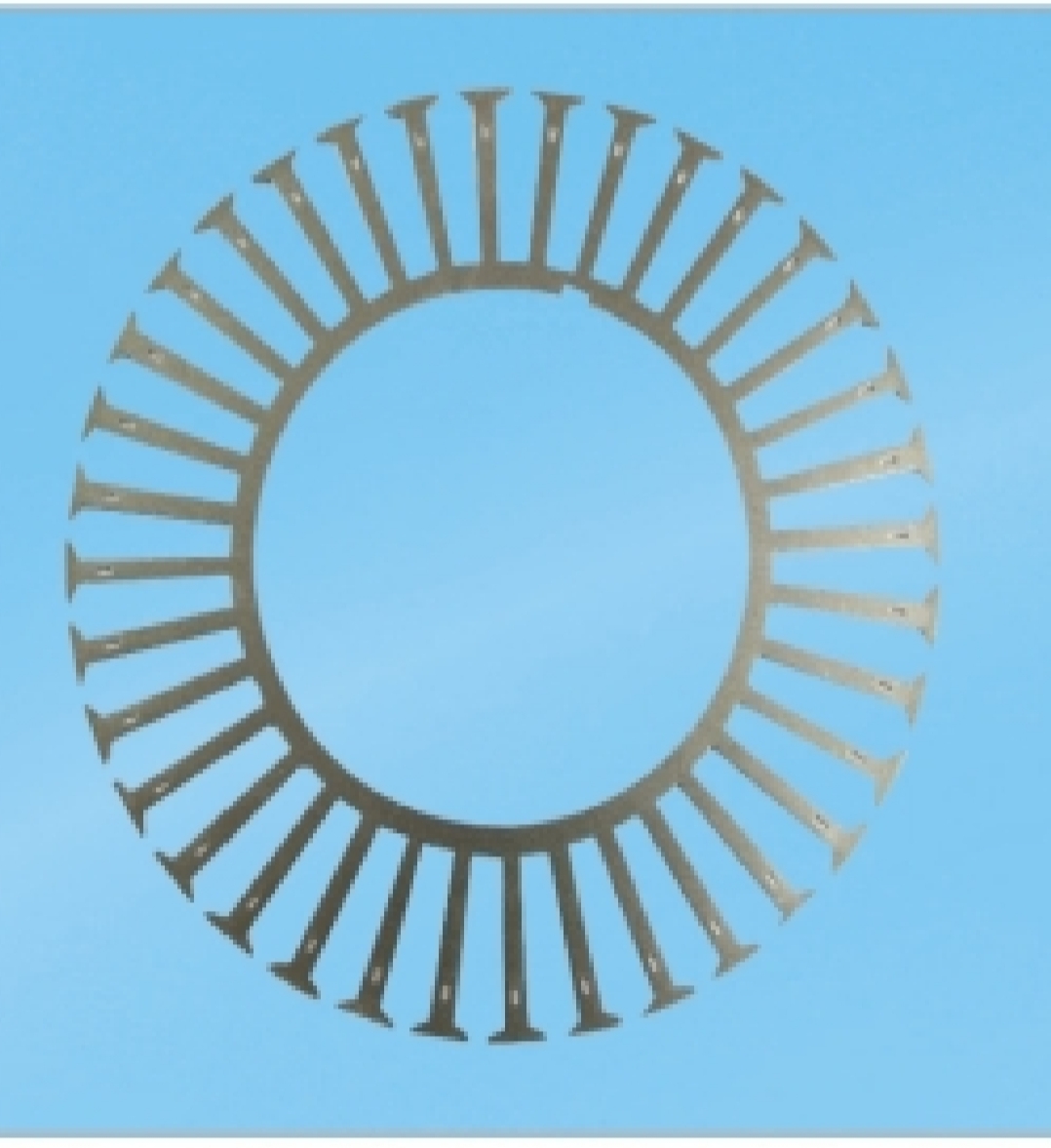
Stator Lamination & Winding Design: Optimize for:
-
High torque density (especially starting torque).
-
Low iron losses (for efficiency across speed range).
-
Good thermal performance (copper fill factor, slot design).
-
Low cogging torque (for smooth start/rotation).
-
-
Magnet Material & Placement: High-energy magnets (e.g., NdFeB) for high torque density and efficiency. Surface-mounted (SPM) is common; interior permanent magnet (IPM) can offer advantages in saliency torque and field weakening range.
-
-
Choose the Sensing & Control Strategy:
-
Sensorless Control: Highly preferred for pumps due to:
-
Lower cost.
-
Increased reliability (no sensor to fail).
-
Better sealing (no sensor wires penetrating housing).
-
Requires sophisticated algorithms (Back-EMF zero-crossing, Observer-based, HF injection) especially for reliable low-speed start-up under load (critical for pumps!).
-
-
Sensored Control (Hall Sensors): Simpler control, excellent low-speed torque. Use if sensorless start-up under full load is too challenging or cost is less critical.
-
Drive Method:
-
Field Oriented Control (FOC / Sinusoidal Drive): Essential for modern pump motors. Provides:
-
Maximum efficiency (minimized torque ripple, copper losses).
-
Smooth, quiet operation (low vibration/noise).
-
Excellent torque control across the speed range.
-
High dynamic response for pressure/flow regulation.
-
-
*Trapezoidal (6-Step) Drive:* Simpler, cheaper electronics. Less efficient, noisier, more torque ripple. Generally unsuitable for high-performance pumps today.
-
-
-
Integrate Application-Specific Features:
-
Motor Controller (Driver): Must implement:
-
Soft-start to limit inrush current.
-
Dry-run protection (detect no-load condition to prevent overheating).
-
Overload/overcurrent protection.
-
Over-temperature protection (using motor thermistors or model-based).
-
Closed-loop speed control (based on user setpoint or external signal).
-
Advanced: Closed-loop pressure or flow control (requires feedback sensor).
-
Communication interfaces (UART, CAN, Modbus, BACnet) for system integration.
-
-
Mechanical Design:
-
Robust bearings (handling potential axial/thrust loads from impellers).
-
Sealing (shaft seals, housing gaskets) for required IP rating (e.g., IP55, IP68).
-
Cooling (fan, liquid-cooled jacket, heatsink design) based on power and duty cycle.
-
Mounting interface compatible with the pump hydraulic section.
-
Material compatibility with fluid/environment (stainless steel shafts, corrosion-resistant housing).
-
-
-
Validation & Testing:
-
Performance Testing: Measure torque-speed curves, efficiency maps (especially at partial load!), starting torque, power factor.
-
Thermal Testing: Validate cooling under worst-case operating conditions.
-
Environmental Testing: IP rating validation (water/dust ingress), chemical resistance, temperature cycling, vibration.
-
Reliability Testing: Accelerated life testing (bearings, seals, electronics).
-
Control Algorithm Testing: Verify robust sensorless start-up under full load, smooth speed transitions, response to load changes, effectiveness of protection features.
-
System Integration Testing: With the actual pump hydraulic end under various operating conditions (pressure, flow, fluid type).
-
In Essence:
You don't create a new "Pump Motor" classification box. Instead, you engineer a BLDC motor system by:
-
Selecting the appropriate base BLDC motor type (Inrunner/Outrunner, Poles, Magnets).
-
Designing the motor magnetics, windings, and mechanics for high torque, efficiency, and robustness.
-
Implementing sensorless FOC control with pump-specific algorithms (reliable start-up!).
-
Integrating critical protection and control features (Soft start, Dry-run, Overload, Temp).
-
Ensuring mechanical compatibility and sealing (IP rating, bearings, mounting).
-
Rigorously testing against all pump application requirements.
The result is a BLDC Motor System Optimized for Pumping Applications, leveraging the inherent advantages of BLDC technology (efficiency, controllability, reliability) while meeting the specific demands of moving fluids. This optimized system is what the industry refers to as a "Pump Motor."
What is Gimbal Motor in BLDC Motor classification?
Why Pump Motor is important in BLDC Motor classification?
Related Article


