
How to Make Silicon Steel Sheet?
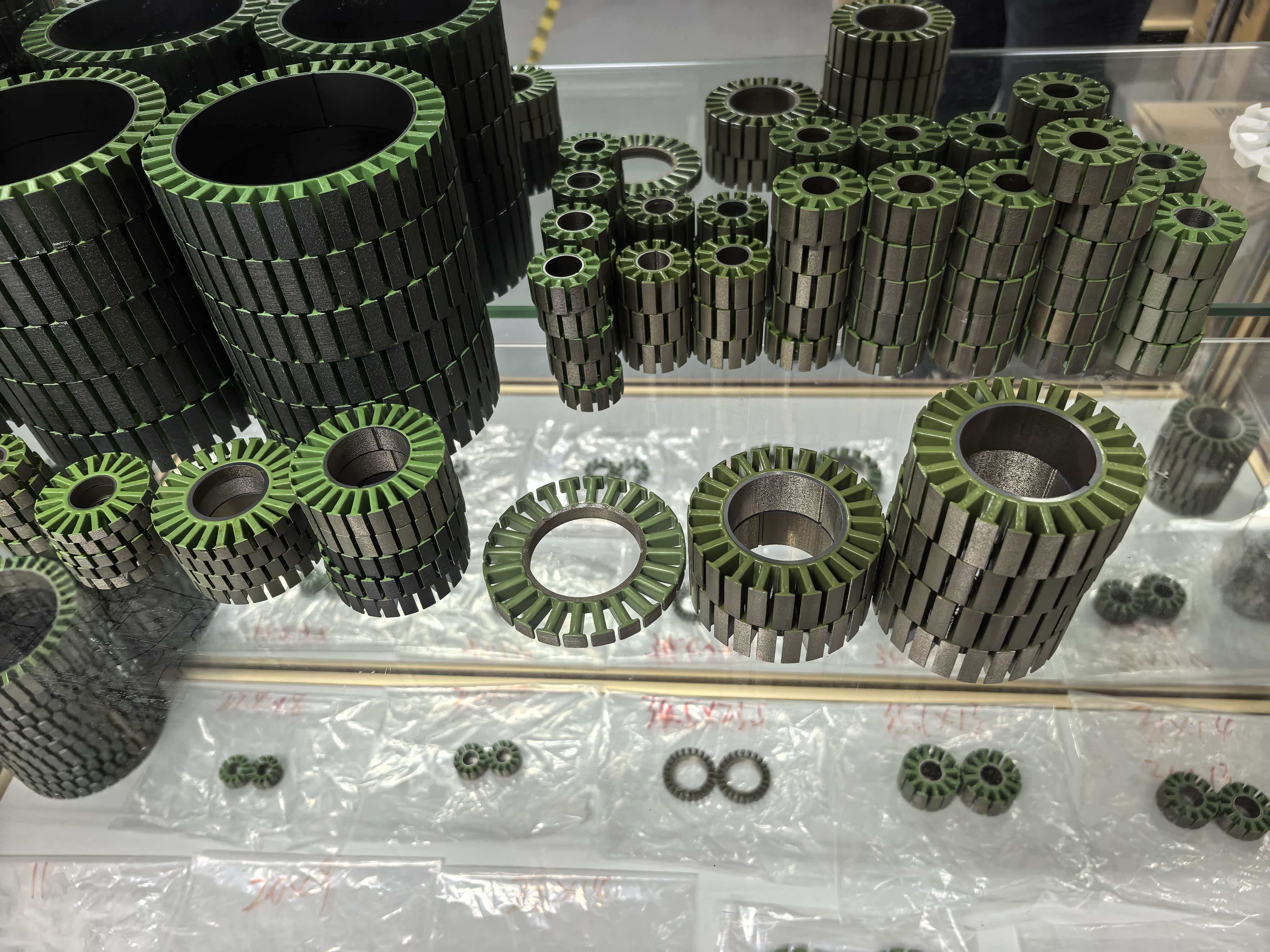
How to Make Silicon Steel Sheet: The Engine Behind Modern Electrification
In the silent hum of a drone’s motor and the efficient power flow of a modern transformer lies a critical, yet often overlooked, engineered material: silicon steel sheet. This specialized metal, also known as electrical steel, is the fundamental soft magnetic material that enables efficient energy conversion. This article provides a comprehensive guide on its manufacturing process, delves into its paramount role in brushless motors (particularly for UAVs), and offers key technical insights.
Article Directory
What is Silicon Steel Sheet?
Silicon steel sheet is a ferrous alloy intentionally doped with 0.5% to 6.5% silicon. This addition is transformative: it significantly increases electrical resistivity, thereby reducing wasteful eddy current losses when exposed to alternating magnetic fields. Simultaneously, it optimizes magnetic permeability and reduces hysteresis loss. These thin, laminated sheets form the cores of electromagnetic devices, directing magnetic flux with remarkable efficiency.
The Manufacturing Process: Step-by-Step
The production of high-grade silicon steel is a marvel of precision metallurgy, designed to control grain structure and purity for optimal magnetic performance.
1. Steelmaking and Continuous Casting
The process begins in advanced furnaces where iron is purified and alloyed. Silicon is added in precise quantities. Aluminum is also frequently added as a grain growth enhancer. The molten alloy is then continuously cast into thick slabs, setting the initial stage for the material's microstructure.
2. Hot Rolling
The slabs are reheated to a high temperature and passed through a series of rolling stands. This hot rolling process reduces the slab to a coiled band, typically 1.5-3mm thick, known as a hot band. This step also begins to shape the initial grain structure.
3. Pickling and Cold Rolling
The hot band has a surface oxide layer removed via pickling in an acid solution. It then undergoes critical cold rolling at room temperature. This step dramatically reduces the thickness to the final gauge required for motor laminations—often as thin as 0.10mm to 0.35mm for high-performance motors. Cold rolling hardens the steel and elongates the grains.
4. Decarburization Annealing
This is a vital thermal treatment. The cold-rolled coil is heated in a controlled atmosphere furnace (often a mix of hydrogen and nitrogen). The primary goals are:
-
Decarburization: Removing carbon atoms, which are magnetic "pinning" sites that increase hysteresis loss.
-
Recrystallization and Grain Growth: Relieving the stresses from cold rolling and allowing the formation of a uniform, coarse grain structure, which is essential for high magnetic permeability.
5. Insulating Coating Application
A thin, inorganic or organic insulating coating (e.g., C-4, C-5 type) is applied to both surfaces. This coating is electrically resistant but thermally conductive. It is absolutely critical as it insulates each lamination from its neighbors, minimizing interlaminar eddy currents when sheets are stacked into a core. For a deep dive into how these coated sheets become a functional motor component, our blog How to Make UAV Stator Core? details the stamping, stacking, and bonding processes.
6. Final Slitting and Packaging
The master coil of finished silicon steel is precisely slit into narrower widths specified by motor manufacturers. These slit coils are then ready for shipment to laminations stampers or motor factories.
Why Silicon Steel is Crucial for UAV Brushless Motors
In the competitive world of UAVs, power density and efficiency are king. The stator core, built from stacked silicon steel laminations, is the heart of a brushless motor where electromagnetic energy is converted into torque.
-
High-Frequency Operation: UAV motors spin at extremely high speeds (tens of thousands of RPM), resulting in high magnetic reversal frequencies. Thin-gauge silicon steel (e.g., 0.1mm or 0.2mm) is essential to suppress eddy current losses at these frequencies.
-
Thermal Management: Lower core loss means less heat generated inside the motor, allowing for more aggressive performance without overheating and enabling longer flight times.
-
High Saturation Flux Density: Silicon steel can withstand strong magnetic fields without saturating, allowing motor designers to create more powerful and compact motors.
Expert Insight: The Thinner, The Better
Dr. Helena Chen, a materials engineer specializing in electromagnetic alloys, notes: "The push in the premium UAV sector is unequivocally toward thinner laminations. While 0.35mm was once standard, we now see a strong shift to 0.2mm and even 0.1mm for flagship models. The reduction in core loss can be 30-50% when moving from 0.35mm to 0.1mm. This isn't just an incremental gain; it's a fundamental enabler for the next leap in motor power density and thermal efficiency, directly translating to longer endurance and higher payload capacity for drones."
Typical Silicon Steel Parameters for UAV Motor Stator Cores
| Parameter | Typical Specification Range for UAV Motors | Significance |
|---|---|---|
| Silicon Content | 2.5% - 3.5% | Optimizes resistivity and reduces core loss. |
| Thickness | 0.10mm, 0.20mm, 0.35mm | Thinner gauges reduce eddy current loss at high frequencies. |
| Core Loss (P1.0/400) | 6.0 - 15.0 W/kg | Key efficiency metric. Lower is better. Measured at 1.0 Tesla & 400Hz. |
| Magnetic Flux Density (B50) | 1.60 - 1.75 Tesla | Indicates magnetic "strength." Higher values allow for more compact design. |
| Coating Type | C-5, C-6, or Specialty Organic | Provides interlamination insulation, weldability, and corrosion resistance. |
| Grade Example | Non-Oriented M235-35A, M170-50S | 'M' for motor, number indicates max core loss (e.g., 235 W/kg @1.5T/50Hz), suffix indicates thickness (35=0.35mm). |
Industry Frequently Asked Questions (FAQ)
Q1: Why is silicon added to steel for electromagnetic applications?
A: Silicon increases the steel's electrical resistivity, which is the primary defense against eddy current losses. It also reduces hysteresis loss and improves magnetic permeability, making it easier to magnetize and demagnetize the material efficiently.
Q2: How do I choose between 0.2mm and 0.35mm thickness for my motor?
A: The choice balances cost and performance. 0.2mm laminations offer significantly lower core loss (especially at high speeds/RPM) and are preferred for high-performance, efficiency-critical UAV motors. 0.35mm laminations are more cost-effective and mechanically robust, suitable for cost-sensitive or lower-speed applications.
Q3: What is the difference between grain-oriented (GO) and non-oriented (NO) silicon steel?
A: Grain-Oriented (GO) steel has silicon crystals aligned in one direction, offering exceptional magnetic properties along that axis. It's used almost exclusively in power transformers. Non-Oriented (NO) steel has a random crystal structure, providing good magnetic properties in all directions within the sheet plane, making it the essential choice for rotating machines like motors and generators.
Q4: Is the insulating coating really that important?
A: Absolutely. Without an effective interlamination insulating coating, the stacked laminations would act electrically like a solid block of metal, causing massive eddy current losses and rendering the motor extremely inefficient and prone to overheating. The coating is a critical, non-negotiable component of the final product.
Q5: This blog explains the material production. How do we get from this sheet to a finished motor stator?
A: Excellent question. The silicon steel sheet is the raw material. The next stage involves precision stamping the laminations, stacking them to the correct height, and bonding them into a rigid stator core assembly. This entire fabrication process is covered in detail in our dedicated article: How to Make UAV Stator Core?.
Conclusion
From its meticulously controlled birth in a steel mill to its final form spinning at the heart of a UAV's motor, silicon steel sheet is a cornerstone of modern electrification. Understanding its manufacturing process and specifications is key to designing more efficient, powerful, and reliable electromagnetic devices that push the boundaries of technology, from the drones in our skies to the vast global electrical grid.
What is Multirotor Power Type Drone Motor Stator Core?
Why Silicon Steel Sheet is Important for BLDC Motor?
Related Article


