
What is self-bonding motor lamination stacks?
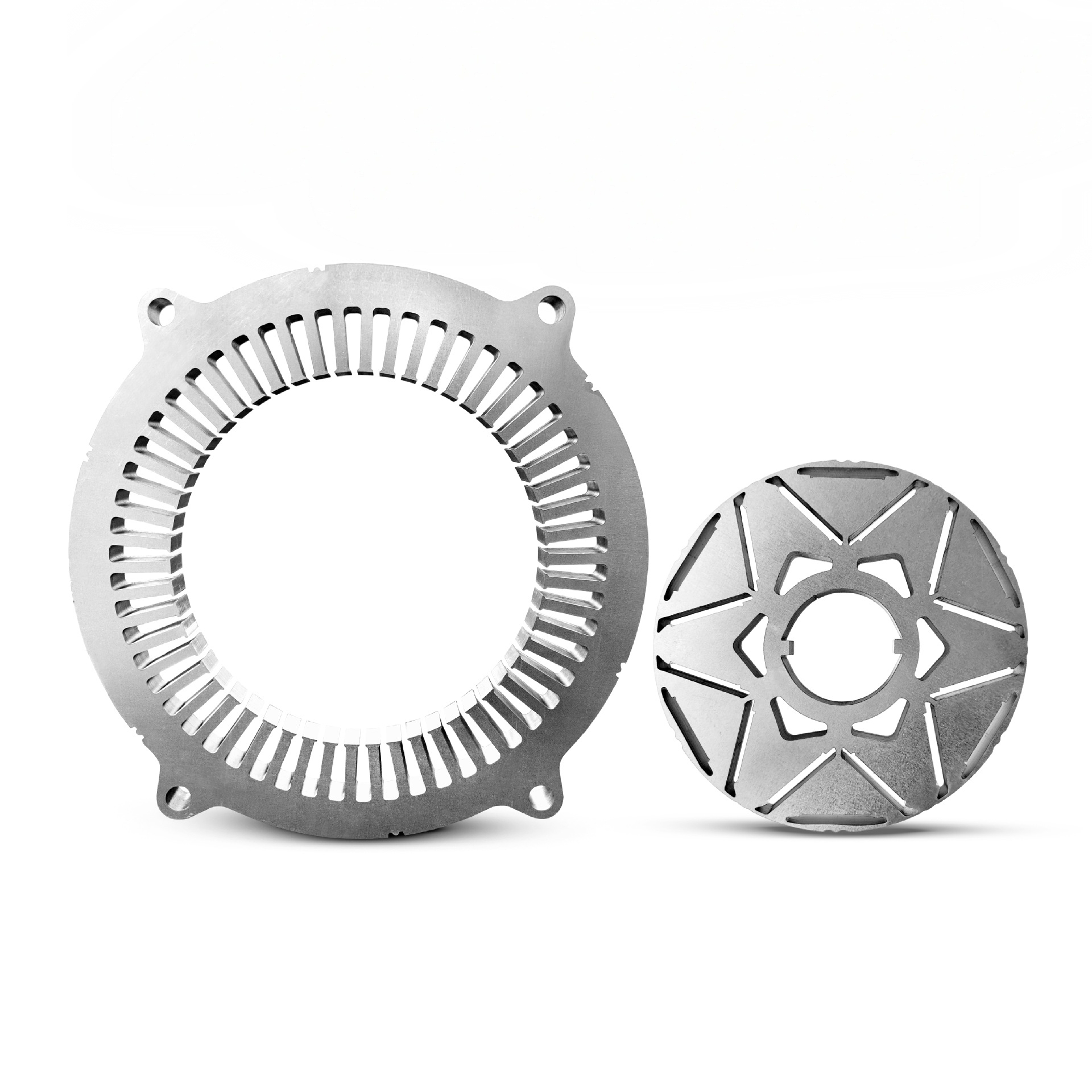
What is Self-Bonding Motor Lamination Stacks? The Invisible Force Behind Precision Motors
Table of Contents
-
Introduction: The Quest for Motor Integrity
-
What Are Self-Bonding Motor Lamination Stacks?
-
How Self-Bonding Technology Works
-
Key Parameters of Self-Bonding Lamination Cores
-
Self-Bonding vs. Progressive Lamination Cores: A Detailed Comparison
-
Expert Insights: Why This Technology Matters
-
Application Spotlight: From Drones to EVs
-
Frequently Asked Questions (FAQs)
Introduction: The Quest for Motor Integrity
In the world of electric motor design, engineers perpetually seek solutions that enhance efficiency, reduce noise, and simplify manufacturing. One such innovation that has revolutionized the assembly of motor cores is the self-bonding motor lamination stack. This technology addresses a fundamental challenge: how to securely fasten hundreds of thin steel laminations together into a rigid, unified magnetic circuit without compromising its electromagnetic performance.
What Are Self-Bonding Motor Lamination Stacks?
A self-bonding motor lamination stack is a core assembly for electric motors and generators where individual laminations are coated with a specially formulated thermal or reactive adhesive. When subjected to a controlled process—typically heat and pressure—this adhesive activates, bonding each lamination to its neighbor. The result is a single, robust, and precisely aligned stack that behaves as a solid unit, eliminating the need for traditional mechanical fastening methods like welding, riveting, or interlocking.
This technique is pivotal for creating the high-precision, low-loss magnetic pathways essential in modern, high-performance applications.
How Self-Bonding Technology Works
The magic lies in the coating and the process:
-
Coating Application: Each electrical steel lamination is precisely stamped and then coated with a micro-thin layer of adhesive. This coating is often applied in a dotted or patterned form to minimize eddy current paths.
-
Stacking: Laminations are stacked to the required height with precise alignment.
-
Bonding Activation: The stack is placed in a bonding press. Under controlled heat (typically 150°C - 220°C) and pressure, the adhesive cures or polymerizes.
-
Curing: The adhesive solidifies, creating a strong, uniform bond shear strength between every layer. The entire process is fast, reliable, and automatable.
For a deeper look into the precision manufacturing of laminations for specific uses, you can refer to our previous blog: How to make drone motor core lamination?, which details the stamping and processing nuances.
Key Parameters of Self-Bonding Lamination Cores
The performance of a self-bonding stack is defined by several critical parameters. The following table outlines typical general specifications:
| Parameter | Typical Value / Description | Importance |
|---|---|---|
| Adhesive Type | Epoxy, Phenolic, or Acrylic-based | Determines thermal class & bonding strength |
| Bond Shear Strength | 5 - 15 MPa (or higher) | Defines mechanical integrity of the stack |
| Operating Temperature | Class 130°C (B) to 220°C (H) and above | Must match motor's thermal environment |
| Core Loss | Comparable to, or slightly higher than, unbonded laminations | Directly impacts motor efficiency |
| Stacking Factor | > 97% | Ratio of solid steel to total volume; affects magnetic flux density |
| Lamination Thickness | 0.1mm - 0.65mm | Thinner laminations reduce eddy currents but increase layers |
| Pressure During Bonding | 2 - 10 MPa | Ensures uniform adhesive flow and contact |
Self-Bonding vs. Progressive Lamination Cores: A Detailed Comparison
While self-bonding stacks excel in certain areas, progressive lamination cores (where laminations are mechanically interlocked during the stamping process) remain a common alternative. Here’s a direct comparison:
| Feature | Self-Bonding Stacks | Progressive (Interlocked) Stacks |
|---|---|---|
| Mechanical Integrity | Excellent, uniform bond across entire stack. | Good, but dependent on interlock points. |
| Electromagnetic Performance | Superior. No shorting bridges; lower eddy current loss. | Good, but interlock points can create minor short circuits, increasing core loss. |
| Geometric Freedom | High. Allows complex slots and precise alignment. | Limited by the need for interlocking features in the die design. |
| Manufacturing Speed | Very high post-stacking. Stacking and bonding are separate, fast steps. | Extremely high in-die. Stamping and stacking happen simultaneously. |
| Tooling Cost | Lower. Requires standard stamping dies. | Higher. Requires complex progressive dies with stacking mechanisms. |
| Best For | High-efficiency, low-noise, high-frequency motors (e.g., drones, servo, EV traction). | High-volume, cost-sensitive applications where peak efficiency is less critical. |
Expert Insights: Why This Technology Matters
Dr. Anya Sharma, a senior electromagnetic design engineer, emphasizes its value: "*The shift to self-bonding laminations was a game-changer for our high-speed servo motor line. By eliminating the interlock bridges, we reduced core losses by over 8%. More importantly, the exceptional rigidity of the bonded stack dramatically reduced acoustic noise, a critical factor for medical and robotics applications. It transforms the core from a loose assembly into a true structural component.*"
This expert view highlights the dual benefit: enhanced electromagnetic purity and superior mechanical performance.
Application Spotlight: From Drones to EVs
The unique advantages of self-bonding stacks make them ideal for demanding applications:
-
Drone Motors: As discussed in our previous blog on drone motor cores, minimizing weight and maximizing efficiency is paramount. Self-bonding allows for ultra-precise, rigid stacks that handle high RPMs with minimal vibration.
-
Electric Vehicle Traction Motors: These motors demand peak efficiency, power density, and reliability. Self-bonding cores deliver the low-loss and robust performance needed.
-
Precision Servo and Robotics: Low acoustic noise, high torque density, and flawless performance at various speeds are critical here.
-
Aerospace and Medical Devices: Where reliability, lightness, and quiet operation are non-negotiable.
Frequently Asked Questions (FAQs)
Q1: Are self-bonding lamination stacks more expensive than traditional ones?
A: The raw material (coated steel) can be slightly more costly. However, the total cost of ownership is often lower due to simplified tooling, faster assembly, reduced waste, and the superior motor performance that can allow for downsizing of other components.
Q2: Can the adhesive withstand high motor operating temperatures?
A: Yes. Adhesives are classified by thermal class (e.g., Class 180°C/H). It is crucial to select an adhesive grade that exceeds the motor's maximum operating temperature to ensure long-term bond integrity.
Q3: Is the bonding process reversible or repairable?
A: No. The bond is permanent and thermosetting. A bonded stack cannot be disassembled without destroying the laminations, which underscores the importance of precision in the initial stacking process.
Q4: How does self-bonding compare to welding or gluing stacks manually?
A: It is superior to both. It avoids the thermal distortion and magnetic degradation of welding and is far more consistent, uniform, and automatable than manual gluing.
Q5: For a new motor design, when should I choose self-bonding over progressive laminations?
A: Choose self-bonding if your priorities are: maximum efficiency, lowest noise, high-frequency operation, or complex lamination geometry. Choose progressive laminations for extremely high-volume, cost-driven projects where these performance parameters are secondary.
Why self-bonding motor lamination stacks is important in motor stamping classification?
How to Make Axial Flux Motor Lamination Core
Related Article


