
How to make self-bonding motor lamination stacks?
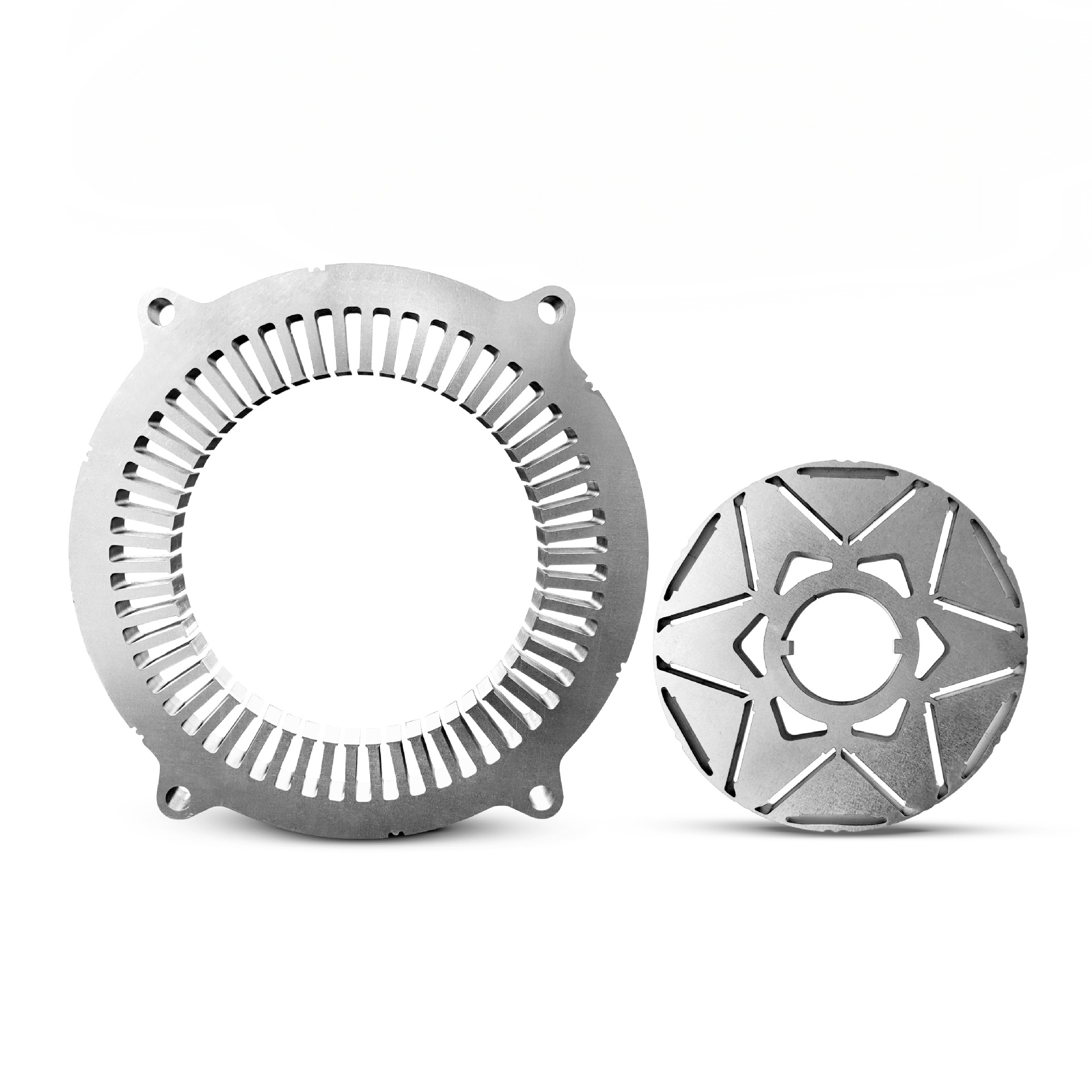
How to Make Self-Bonding Motor Lamination Stacks: A Complete Guide
Table of Contents
-
Introduction to Self-Bonding Lamination Stacks
-
Key Advantages Over Traditional Methods
-
Step-by-Step Manufacturing Process
-
Technical Parameters & Specifications
-
Comparison: Self-Bonding vs. Non-Self-Bonding Cores
-
Expert Insights & Industry Perspectives
-
Frequently Asked Questions (FAQ)
H1: How to Make Self-Bonding Motor Lamination Stacks: A Complete Guide
H2: Introduction to Self-Bonding Lamination Stacks
Self-bonding motor lamination stacks represent a significant advancement in electric motor manufacturing technology. Unlike traditional methods that require welding, riveting, or interlocking mechanisms, self-bonding stacks utilize a specially coated electrical steel that bonds under heat and pressure. This innovative approach creates monolithic core structures with exceptional mechanical integrity and improved electromagnetic performance.
The technology has gained widespread adoption across industries requiring high-precision, high-efficiency motors, particularly in automotive, aerospace, and industrial automation applications where performance consistency and manufacturing efficiency are critical.
H2: Key Advantages Over Traditional Methods
Self-bonding technology offers several compelling benefits:
-
Elimination of secondary joining processes reduces manufacturing steps
-
Improved magnetic flux characteristics due to absence of physical connectors
-
Enhanced thermal conductivity throughout the core structure
-
Reduced vibration and acoustic noise in operation
-
Higher structural rigidity for demanding applications
H2: Step-by-Step Manufacturing Process
H3: Material Selection and Preparation
The process begins with selecting appropriate electrical steel laminations pre-coated with a thermally activated adhesive. This adhesive layer, typically 2-5 microns thick, remains inert during stamping operations but activates under specific conditions.
H3: Precision Stamping and Stacking
Laminations are stamped using precision dies, similar to traditional methods. The key difference lies in handling – operators must maintain clean stacking environments to prevent contamination of bonding surfaces. For high-volume production, automated stacking systems ensure precise alignment and consistent layer count.
H3: The Bonding Process: Heat and Pressure Application
Core bonding occurs in specialized fixtures applying controlled pressure (typically 2-10 MPa) while heating to the adhesive's activation temperature (usually 180-220°C). The process involves:
-
Fixturing and alignment in bonding apparatus
-
Progressive heating to activate adhesive without damaging insulation
-
Pressure maintenance during cooling phase
-
Controlled cooling to room temperature
H3: Post-Bonding Treatments
After bonding, stacks undergo:
-
Trimming and finishing operations
-
Insulation testing to verify integrity
-
Dimensional verification against specifications
-
Optional annealing for stress relief (with temperature-sensitive adhesives)
H2: Technical Parameters & Specifications
H3: General Parameters for Self-Bonding Cores
| Parameter | Typical Range | Notes |
|---|---|---|
| Adhesive Type | Epoxy, Phenolic, or Polyimide-based | Choice depends on temperature requirements |
| Bonding Temperature | 180-220°C | Some high-temp adhesives require 250°C+ |
| Bonding Pressure | 2-10 MPa | Varies with lamination size and adhesive |
| Cure Time | 30 seconds to 5 minutes | Depends on heating method and mass |
| Shear Strength | 10-25 MPa | After complete curing |
| Operating Temperature Range | -40°C to 180°C (standard) | High-temp versions up to 250°C |
| Insulation Resistance | >100 MΩ | At 500VDC, core-to-core |
| Stacking Factor | 0.97-0.99 | Higher than welded/riveted stacks |
H2: Comparison: Self-Bonding vs. Non-Self-Bonding Cores
H3: Performance and Quality Comparison
Self-bonding cores excel in:
-
Magnetic performance: No physical discontinuities disrupting flux paths
-
Structural uniformity: Even stress distribution throughout stack
-
Thermal management: Continuous material interface improves heat transfer
-
Noise reduction: Eliminates mechanical interfaces that cause vibration
Non-self-bonding cores (welded/riveted/interlocked) present:
-
Magnetic degradation at joint points
-
Localized stress concentrations
-
Thermal barriers at connection points
-
Potential for fretting corrosion
H3: Economic and Manufacturing Considerations
Self-bonding technology shows advantages in:
-
Reduced labor costs through process simplification
-
Lower equipment investment compared to welding systems
-
Minimal scrap rates due to process consistency
-
Faster production cycles for high-volume applications
Traditional methods may be preferred for:
-
Very low-volume production where bonding equipment isn't justified
-
Extreme temperature applications beyond adhesive limits
-
Prototype development requiring frequent design changes
H2: Expert Insights & Industry Perspectives
Dr. Elena Rodriguez, Senior Motor Design Engineer at Premier Electromechanical Solutions, notes: "The transition to self-bonding laminations represents one of the most significant improvements in motor manufacturing in the past decade. The elimination of welding not only improves efficiency but also enables more compact designs previously limited by thermal considerations at joint points."
Michael Chen, Production Manager at a leading automotive supplier, adds: "*Our implementation of self-bonding technology reduced core assembly time by 65% while improving consistency. The key was developing precise thermal profiles specific to each core geometry to ensure complete adhesive activation without damaging the insulation coating.*"
For applications involving specialized geometries like those discussed in our previous article "How to Progressive Outrunner Motor Core?", self-bonding technology offers particular advantages in maintaining structural integrity in thin-web designs where welding would cause distortion.
H2: Frequently Asked Questions (FAQ)
H3: Can self-bonding laminations be reworked or separated after curing?
Most adhesives create permanent bonds that cannot be separated without destroying the laminations. Some formulations allow disassembly at elevated temperatures (250°C+), but this typically degrades the electrical insulation.
H3: How does self-bonding affect the motor's overall efficiency?
Properly implemented self-bonding typically improves efficiency by 0.5-2% due to:
-
Reduced eddy current losses at joint interfaces
-
Better heat dissipation lowering winding temperatures
-
More consistent air gaps from rigid core structure
H3: What are the limitations in high-temperature applications?
Standard adhesives are rated for continuous operation at 180°C. For higher temperatures (up to 250°C), specialty polyimide or ceramic-filled adhesives are available but at increased cost. Above 250°C, mechanical fastening methods may still be necessary.
H3: How does self-bonding impact repair and maintenance?
Self-bonded cores are generally treated as integral units - individual laminations cannot be replaced. The entire stator or rotor core must be replaced if damaged, though this is offset by the technology's higher reliability and reduced failure rates.
H3: Is the bonding process compatible with all electrical steel grades?
Most modern electrical steel coatings are compatible with bonding adhesives. However, some high-silicon content steels or special surface treatments may require adhesive formulation adjustments. Always conduct compatibility tests with new material combinations.
H2: Conclusion
Self-bonding motor lamination technology represents a sophisticated solution for modern motor manufacturing, offering significant advantages in performance, efficiency, and production economics. While requiring careful process control and initial setup investment, the long-term benefits make it an increasingly preferred choice for quality-focused applications.
As motor design continues evolving toward higher efficiencies and power densities—whether for traditional configurations or specialized designs like progressive outrunner cores—self-bonding technology provides the structural and electromagnetic integrity needed to meet these demanding requirements.
What is Propulsion System Outrunner Motor Lamination Stacks?
Why self-bonding motor lamination stacks is important in motor stamping classification?
Related Article


