
Why self-bonding motor lamination stacks is important in motor stamping classification?
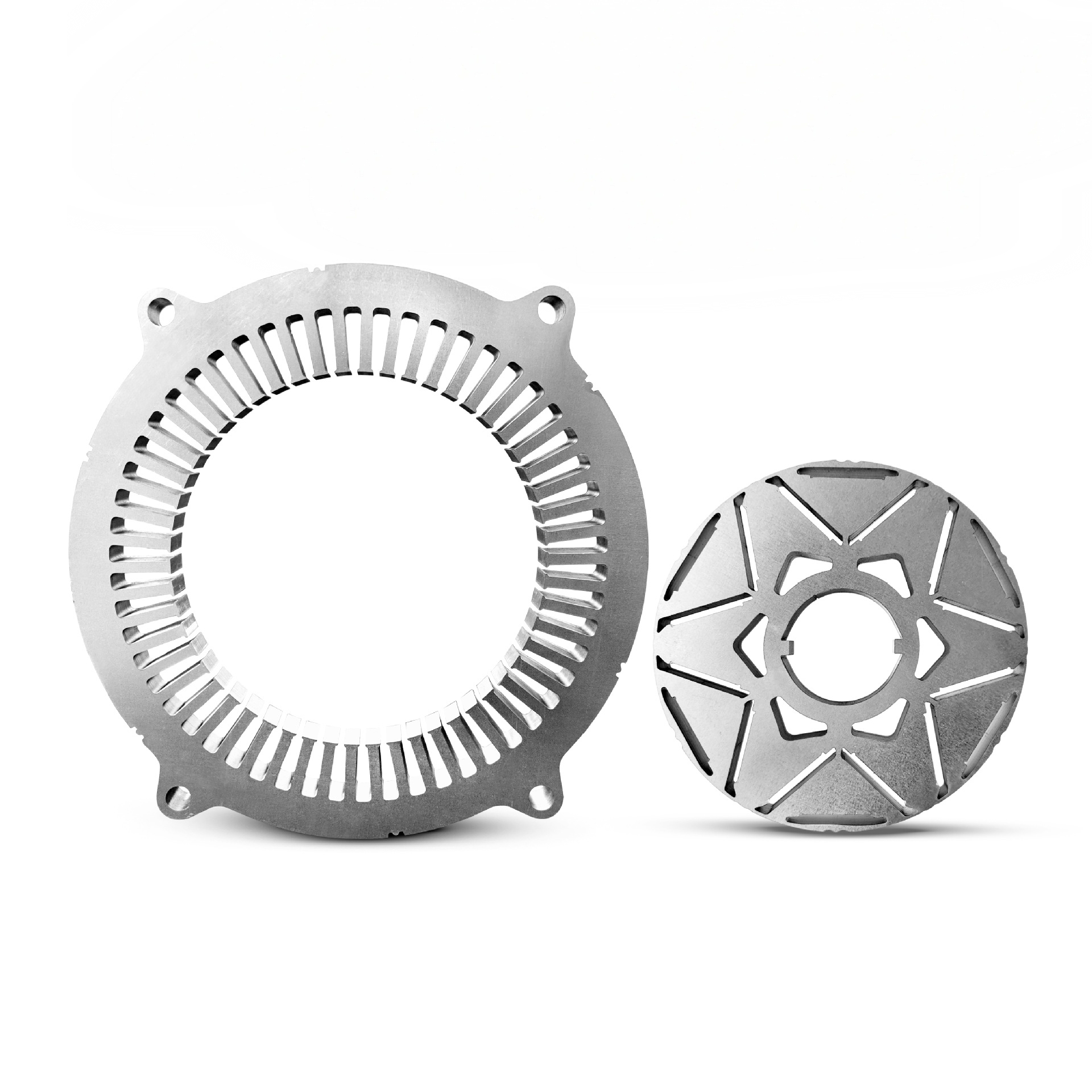
Why Self-Bonding Motor Lamination Stacks Are a Critical Classification in Motor Stamping
Introduction
In the intricate world of electric motor manufacturing, the method used to assemble the motor lamination stack is not just a minor process detail—it is a fundamental classification criterion. Among the various techniques, self-bonding motor lamination stacks have emerged as a distinct and vital category, defining a class of motors prized for their superior performance. This blog explores why this technology is a pivotal classification in motor stamping, how it compares to other methods, and what it means for design and production choices.
Table of Contents
-
The Stamping Classification Landscape
-
Defining the Self-Bonding Category
-
The Self-Bonding Advantage: More Than Just Glue
-
Key Technical Parameters of Self-Bonding Cores
-
Self-Bonding vs. Progressive Die Cores: A Classification Clash
-
Expert Perspective: The Strategic Choice
-
Frequently Asked Questions (FAQs)
-
Conclusion
The Stamping Classification Landscape
Motor lamination cores are primarily classified by their assembly and bonding method. This classification directly dictates the motor's performance profile, cost structure, and optimal application. The main categories include:
-
Interlocking & Welded Stacks: Traditional methods using mechanical locks or welds.
-
Progressive Die (Notched) Cores: A highly automated, single-die process. (We detailed this in our blog: How to make progressive motor core?)
-
Self-Bonding (Adhesive-Bonded) Stacks: The focus of this article, where a cured adhesive creates the bond.
Defining the Self-Bonding Category
Self-bonding motor lamination stacks represent a specific class where individual laminations, coated with a reactive adhesive, are stacked and bonded under heat and pressure into a single rigid unit. This classification is defined by its adhesive-based integration, which eliminates the need for mechanical fastening points that compromise magnetic integrity.
The Self-Bonding Advantage: More Than Just Glue
Choosing the self-bonding classification unlocks distinct benefits that justify its category:
-
Magnetic Circuit Purity: By eliminating weld points and mechanical bridges, it prevents local short circuits that create eddy current losses. This results in a more efficient magnetic circuit, a hallmark of this class.
-
Structural Integrity: The full-surface adhesive bond creates a monolithic core structure with exceptional vibration damping, leading to quieter operation and improved durability under high torque.
-
Design Freedom: This classification allows for more complex lamination geometries that are unsuitable for interlocking or welding, enabling advanced motor designs.
-
Thermal & Chemical Resilience: The cured adhesive bond is stable across a wide temperature range and resistant to common motor lubricants and coolants.
Key Technical Parameters of Self-Bonding Cores
The specifications below define the performance envelope of cores within the self-bonding classification.
Typical Self-Bonding Lamination Core Parameters
| Parameter | Typical Range / Specification | Importance in Classification |
|---|---|---|
| Bonding Agent | Thermosetting Epoxy/Phenolic | Defines the curing mechanism and thermal class. |
| Shear Bond Strength | 25 - 60 MPa | Critical for structural rigidity and torque handling. |
| Curing Temperature | 160°C - 230°C | Determines process requirements and material compatibility. |
| Lamination Insulation | Excellent (Adhesive Layer) | Inherent interlamination insulation reduces core loss. |
| Stack Height Tolerance | ±0.05 mm | Indicates high precision achievable in this category. |
| Thermal Class | Class 155 (F) to Class 180 (H) | Defines suitable motor operating temperatures. |
Self-Bonding vs. Progressive Die Cores: A Classification Clash
Understanding motor stamping classifications requires a clear comparison. Here’s how the Self-Bonding category contrasts with the Progressive Die category.
The Case for Self-Bonding Classification:
-
Performance-Oriented: The primary driver is maximizing efficiency and acoustic performance. Ideal for premium segments.
-
Lower Core Loss: Superior magnetic properties make it the choice for high-efficiency (IE4, IE5) and high-frequency motors.
-
High Precision & Rigidity: Essential for servomotors, robotics, and aerospace applications.
-
Process: Involves stamping, coating, stacking, and curing. Suited for medium-to-high volume production of performance-critical motors.
The Case for Progressive Die Core Classification:
-
Volume & Cost-Oriented: The primary driver is maximizing production speed and minimizing unit cost.
-
Ultra-High Speed: The continuous progressive die process is unmatched for mass production (e.g., appliance motors).
-
Inherent Automation: Laminations are connected and aligned by the carrier belt, simplifying handling.
-
Trade-off: May involve slight magnetic compromises due to interlocking notches or carrier nicks.
Classification Summary: Choose Self-Bonding for performance-critical applications. Choose Progressive Die for cost-critical, ultra-high-volume applications.
Expert Perspective: The Strategic Choice
"Classifying a motor design as a candidate for self-bonding stacks is one of the first critical decisions in modern R&D," says Michael Thorne, a manufacturing consultant. "It’s a declaration that efficiency, precision, and noise reduction are non-negotiable. While progressive die cores win on sheer production velocity, the self-bonding category wins on delivering the electromagnetic and mechanical qualities needed for next-generation EVs, precision industrial drives, and premium consumer products. It’s the classification for engineers who cannot afford compromise."
Frequently Asked Questions (FAQs)
Q1: Is self-bonding just for small or prototype motors?
A: No, this is a common misconception. The self-bonding classification is scalable and is successfully used in motors ranging from small precision servos to large traction motors for electric vehicles. The key is process engineering, not size limitation.
Q2: How does the cost classification compare?
A: Self-bonding cores often have a higher initial piece-part cost due to coated material and the bonding process. However, they offer a lower total system cost in performance-critical applications by boosting motor efficiency (saving energy), reducing noise (simplifying acoustic management), and improving reliability.
Q3: Can I switch an existing welded design to self-bonding easily?
A: It often requires a design review. The removal of weld points changes the structural dynamics and thermal paths. However, the switch typically results in a direct performance gain (higher efficiency, lower loss) without changing the lamination geometry.
Q4: Does the adhesive affect the motor's thermal management?
A: The adhesive layer is very thin (<10 µm) and has a negligible impact on axial heat conduction. In fact, by eliminating welded thermal "short circuits" between laminations, it can promote more uniform radial heat distribution in the stack.
Conclusion
Self-bonding motor lamination stacks are far more than an alternative assembly method; they represent a crucial performance-centric classification within motor stamping. This category is defined by its commitment to preserving the ideal magnetic circuit, achieving exceptional mechanical integrity, and enabling advanced motor designs. When your project classification prioritizes efficiency, precision, and quiet operation over absolute minimum unit cost, specifying a self-bonding stack is the definitive technical choice. It separates standard motors from high-performance solutions, solidifying its importance in the taxonomy of modern motor manufacturing.
How to make self-bonding motor lamination stacks?
What is self-bonding motor lamination stacks?
Related Article


