
Why winding is important for BLDC Motor?
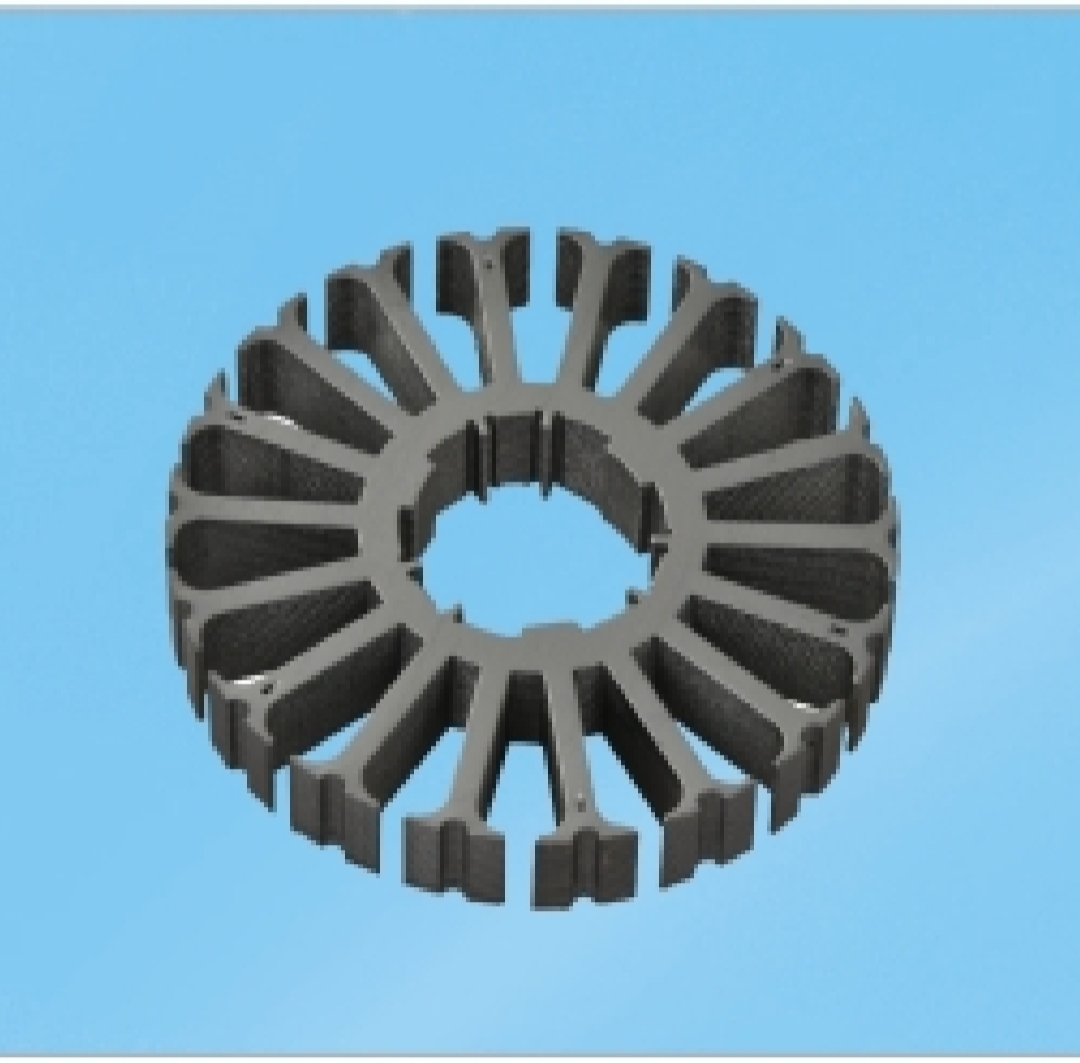
Here's why it's indispensable:
1. Core Function: Electromagnetic Energy Conversion
Windings transform electrical energy into mechanical motion:
-
When current flows through the windings, they become electromagnets.
-
These electromagnets interact with the rotor's permanent magnets, generating torque via magnetic attraction/repulsion.
-
No windings = no electromagnetic field = no rotation.
2. Dictates Motor Performance
Winding design directly controls:
| Parameter | How Windings Affect It |
|---|---|
| Torque | More turns/thicker wire → Higher torque at low speeds (higher torque constant, Kt). |
| Speed (RPM) | Fewer turns/thinner wire → Higher max RPM (lower voltage constant, Kv). |
| Efficiency | Optimal wire gauge/winding pattern reduces copper losses (I²R) and heat generation. |
| Torque Ripple | Distributed windings → Smoother torque; Concentrated windings → Higher ripple. |
| Back-EMF | Winding layout determines back-EMF waveform (sinusoidal vs. trapezoidal). |
3. Enables Electronic Commutation
-
Windings are arranged in 3-phase sets (A, B, C) spatially offset by 120°.
-
The controller energizes phases in sequence, creating a rotating magnetic field that "drags" the rotor.
-
Precision in winding placement ensures smooth commutation and avoids dead zones.
4. Thermal & Electrical Resilience
-
Copper fill factor: Tightly wound coils maximize copper in slots, improving current handling and heat dissipation.
-
Insulation quality: Prevents short circuits at high voltages/temperatures.
-
Phase configuration: Star (Y) or Delta (Δ) connections optimize for voltage/current requirements.
5. Customization for Applications
Windings can be tailored for specific use cases:
-
High-torque motors (e.g., EVs, industrial robots): More turns, thicker wire.
-
High-speed motors (e.g., drones, spindles): Fewer turns, advanced cooling.
-
Low-noise applications (e.g., medical devices): Sinusoidal windings reduce acoustic noise.
6. Impact on Control Complexity
-
Trapezoidal windings: Simpler 6-step commutation (cost-effective).
-
Sinusoidal windings: Require FOC (Field-Oriented Control) for smoother operation.
Why Engineers Obsess Over Winding Design
-
A 10% change in turn count can alter torque/speed by 20%.
-
Poor winding alignment increases cogging torque (jerky startup).
-
Asymmetric phases cause vibration and inefficiency.
In essence: The winding is the BLDC motor's "central nervous system." It defines how efficiently, powerfully, and reliably electrical energy becomes motion. No component impacts performance more profoundly.
How to make a perfect BLDC Motor winding?
What is winding in BLDC Motor?
Related Article


