
Why Turns is Important for Stator Core Winding?
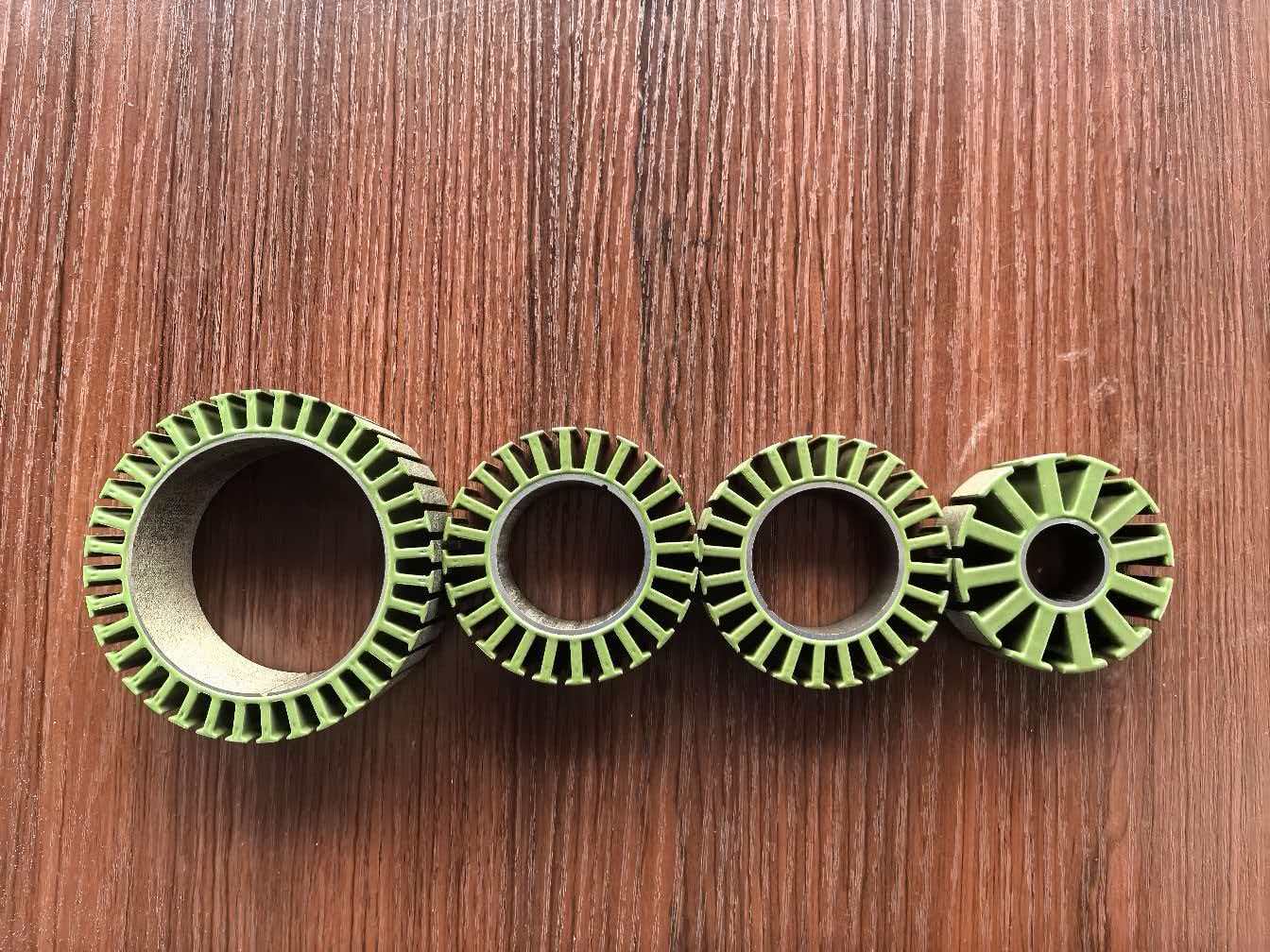
Why Turns is Important for Stator Core Winding? Understanding the Impact of Coil Turns
Table of Contents
-
Introduction: The Hidden Variable in Motor Performance
-
H1: What Are Stator Core Winding Turns?
-
H1: The Technical Importance of Winding Turns
-
H2: Magnetic Field Strength and Magnetomotive Force
-
H2: Back EMF and Motor Speed (Kv Rating)
-
H3: Torque Production and Current Characteristics
-
H4: Efficiency, Heat, and Copper Loss
-
H5: Inductance and Power Factor
-
-
H1: Parameter Comparison: Drone Motors vs. Brushless Floor Fan Motors
-
H2: 通用无人机电机 (General Drone Motor) Stator Core Parameters
-
H2: 落地扇无刷电机 (Brushless Floor Fan Motor) Stator Core Parameters
-
H3: Comparative Analysis: Pros and Cons
-
-
H1: Expert Insight: The Science Behind Turn Count Selection
-
H1: Common Industry FAQs
-
Conclusion: Mastering the Art of Winding Turns
When designing or selecting a brushless motor, engineers often focus on magnet strength or stator diameter. However, one of the most critical yet frequently misunderstood parameters is the number of turns of copper wire in the stator core winding. This single specification fundamentally determines the motor's personality—whether it behaves as a high-speed sprinter or a torque-heavy workhorse -4.
The variation of stator winding turns directly affects key motor parameters such as winding resistance and winding reactance, which further influence the steady-state performance of the motor -6. In this comprehensive guide, we will explore why Stator Core Winding Turns are vital, how they influence performance metrics, and compare the requirements of high-RPM drone motors versus high-torque brushless floor fan motors. If you are new to motor construction, we recommend reading our previous guide on How to Make Drone Motor Stator Core to understand the manufacturing process first.
H1: What Are Stator Core Winding Turns?
A "turn" is a single loop of copper wire wrapped around a stator tooth. If you wind a wire around a stator tooth ten times, you have created 10 turns . The combination of turns across all teeth forms the complete winding configuration of the motor.
-
High Turn Count: Typically uses thinner wire to fit into the limited slot area. This increases the total resistance and inductance of the phase.
-
Low Turn Count: Typically uses thicker wire to fill the available slot area, maximizing the conductor cross-section and reducing resistance.
The total number of turns directly determines the electrical characteristics of the motor, including the Kv rating (RPM per Volt), torque constant, and efficiency curve -4.
H1: The Technical Importance of Winding Turns
H2: Magnetic Field Strength and Magnetomotive Force
The primary job of the stator core winding is to generate a magnetic field. When current passes through the turns of wire, magnetic flux is created. The Magnetomotive Force (MMF) is determined by the formula:
MMF = N × I
(Where N is the number of turns and I is the current).
More turns mean a stronger magnetic field for the same amount of current. However, this comes with a trade-off—to fit more turns, you must often use thinner wire, which increases electrical resistance and copper losses (I²R) .
H2: Back EMF and Motor Speed (Kv Rating)
There is an inverse relationship between the number of turns and the motor's speed constant (Kv) -4:
-
Fewer Turns: Lower resistance and inductance. The motor reaches higher RPM per volt (High Kv).
-
More Turns: Higher resistance and inductance. The motor reaches lower RPM per volt (Low Kv).
This occurs because each turn cutting through the magnetic field generates Back Electromotive Force (Back EMF) . The influences of different stator winding turns on the no-load back-induced EMF must be carefully studied during motor design -6-10. More turns generate higher Back EMF, which opposes the driving voltage, causing the motor to spin slower to reach its equilibrium point.
H3: Torque Production and Current Characteristics
Torque is the rotational force produced by the motor, and winding turns play a decisive role:
-
High Turn Motors (Low Kv): Produce higher torque per ampere. This makes them ideal for swinging heavy loads, like large fan blades, without drawing massive instantaneous current.
-
Low Turn Motors (High Kv): Produce less torque per ampere but can spin very fast. To generate high torque, they must draw significantly higher current, which can quickly lead to heat buildup.
If the actual number of turns is less than specified, especially in higher-power motors that already use few turns, the current will increase, potentially raising magnetic flux density toward saturation and causing severe heating -4.
H4: Efficiency, Heat, and Copper Loss
Heat is the enemy of brushless motors, and the turn count directly influences heat generation through copper loss (I²R) :
-
A motor with too few turns might require extremely high current to start a load, leading to overheating -4.
-
A motor with too many turns (using thin wire) increases resistance (R), which also converts current into heat rather than motion.
Turns count errors can result in increased current, higher operating temperatures, and reduced efficiency -4. Engineers aim for the optimal "slot fill rate"—the ratio of copper in the slots—to balance these competing factors.
H5: Inductance and Power Factor
The number of turns also affects the motor's inductance and power factor . Higher turn counts increase winding reactance, which influences the phase relationship between voltage and current -6. This becomes particularly important in variable-frequency applications where the dv/dt value and insulation stress must be carefully managed -1.
H1: Parameter Comparison: Drone Motors vs. Brushless Floor Fan Motors
To understand how stator core winding turns function in the real world, let's compare a high-performance 通用无人机电机 (General Drone Motor) with a modern 落地扇无刷电机 (Brushless Floor Fan Motor) . These two applications have fundamentally different requirements.
H2: 通用无人机电机 (General Drone Motor) Stator Core Parameters
*Data based on common 0802, 2204, and high-performance FPV motors -2-7.*
| Parameter | Typical Value | Impact on Performance |
|---|---|---|
| Stator Dimensions | 0802 (8mm x 2.8mm) / 2204 (22mm x 4.5mm) | Ultra-compact for high power-to-weight ratio |
| Number of Turns | Low (e.g., 6T - 19T) | Low inductance enables high RPM operation -7 |
| Wire Gauge | 30AWG or multi-strand (5-strand 0.21mm) | Balanced for current handling and weight -2-7 |
| Kv Rating | High (22000Kv - 28000Kv for micro; 2700Kv for larger) | Optimized for 1S-3S battery voltages -2-7 |
| Lamination Thickness | 0.10mm - 0.15mm | Ultra-thin laminations minimize eddy current losses at high frequency -2 |
| Internal Resistance | Very Low (0.05Ω - 0.085Ω) | Minimizes copper loss during high-current bursts -7 |
| Maximum Current | 5.9A - 30A (varies by size) | Supports brief high-power demands -2-7 |
| Insulation Class | Class H (180°C+) | Withstands extreme heat from rapid amp spikes |
| Stator Arms / Poles | 12 arms / 14 poles | Common configuration for outrunner drones -7 |
H2: 落地扇无刷电机 (Brushless Floor Fan Motor) Stator Core Parameters
Data synthesized from typical brushless DC fan motor designs and industry specifications -3-8.
| Parameter | Typical Value | Impact on Performance |
|---|---|---|
| Stator Dimensions | Larger diameter (60mm-120mm+) | Accommodates pole windings for continuous torque |
| Number of Turns | High (Hundreds per coil) | High inductance limits current and maximizes low-speed torque -8 |
| Wire Gauge | Moderate (28AWG - 32AWG) | Optimized for continuous low-current draw |
| Kv Rating | Not applicable (speed controlled by PWM/EC) | Speed regulated electronically for airflow demands |
| Lamination Thickness | 0.35mm - 0.50mm | Cost-effective; high-frequency losses minimal at low RPM |
| Internal Resistance | Moderate | Balances efficiency with continuous operation |
| Maximum Current | Low continuous (0.5A - 3A typical) | Designed for sustained operation, not bursts |
| Insulation Class | Class B (130°C) or F (155°C) | Sufficient for steady-state thermal loads |
| Core Design | Laminated steel with optimized flux paths | Guides magnetic flux efficiently for continuous duty -8 |
H3: Comparative Analysis: Pros and Cons
Drone Motor (Low Turns/High Kv)
-
Pros:
-
Extremely high power-to-weight ratio enables agile flight performance
-
Fast throttle response critical for acrobatic maneuvers
-
Ultra-thin laminations (0.10mm stator core) maximize efficiency at high electrical frequencies -2
-
Low resistance supports brief high-current bursts for acceleration
-
-
Cons:
-
Prone to burning out if stalled or overloaded
-
Low inductance can cause rapid current spikes exceeding ESC limits
-
Requires sophisticated high-frequency drive electronics
-
Less efficient at continuous low-speed operation
-
Brushless Floor Fan Motor (Higher Turns/Lower Kv)
-
Pros:
-
High reliability and longevity for continuous duty operation
-
The higher turn count creates sufficient torque at low speeds without excessive current -8
-
Better suited for constant-speed or variable airflow applications
-
Lower operating temperatures during sustained use
-
More forgiving of voltage variations
-
-
Cons:
-
Much lower power-to-weight ratio (weight not a concern for stationary applications)
-
Cannot change speed as rapidly as drone motors
-
Higher inductance limits peak power output
-
Less efficient at extremely high RPMs if operated there
-
H1: Expert Insight: The Science Behind Turn Count Selection
Industry experts emphasize that selecting the right turn count is a delicate balancing act that requires deep understanding of electromagnetic theory. According to technical specialists at EASA (The Electro•Mechanical Authority):
"Turns count errors can result in increased current, higher operating temperatures, and reduced efficiency. The number of turns directly affects the motor's magnetic flux densities, developed torque, and overall performance characteristics." -4
Academic research confirms this nuanced view. A study on the influence of stator winding turns on motor performance revealed that:
"The variation of stator winding turns will directly affect the key parameters of a motor, such as winding resistance and winding reactance, which further affect the steady-state performance of the motor. The influences of different stator winding turns on the no-load back-induced electromotive force (EMF), as well as on inductance and overload ability must be studied to obtain the variation mechanism." -6-10
Furthermore, in variable-frequency applications, the physical arrangement of turns matters significantly. Patent literature highlights that:
"Due to the high power of the motor, low voltage, large current, high inter-turn working voltage... the first turn and the last turn of the coil scattered in the slot are easy to collide, and run for a period of time. Turn-to-turn short-circuit faults often occur after a period of time, which reduces the reliability." -1
This underscores that turn insulation and proper winding configuration are not just about performance—they are critical for motor survivability. High-turn stators must manage voltage stress between adjacent turns, while low-turn stators must manage thermal stress from high current.
H1: Common Industry FAQs
Q1: Can I rewind my drone motor to change the number of turns?
Technically, yes. However, changing the turn count alters the motor's Kv rating and current characteristics. Adding turns (to lower Kv) requires thinner wire, which reduces current capacity. For high-power motors with thick, low-turn windings, even small changes significantly impact performance. When re-winding, follow the original wire gauge and turn count closely if original performance is required -4.
Q2: Why do brushless fan motors use higher turn counts than drone motors?
Brushless fan motors are designed for continuous operation at lower speeds while maintaining adequate torque. Higher turn counts create sufficient magnetic field strength at lower currents, allowing efficient, sustained operation without overheating. The application priorities are reliability and longevity rather than peak power -8.
Q3: What happens if a motor has too few turns for its operating voltage?
If the actual number of turns is less than specified, the current will increase. This can raise magnetic flux density toward saturation, causing severe heating, reduced efficiency, and potential motor burnout. The motor may also attempt to spin at excessively high RPM, risking mechanical failure -4.
Q4: How does lamination thickness relate to turn count selection?
While not directly related, thin laminations (like 0.10mm in modern drone motors) allow the motor to run at higher electrical frequencies without excessive core losses. This means a low-turn, high-Kv motor benefits more from thin laminations than a low-speed fan motor would. The combination of appropriate turns and thin laminations maximizes overall efficiency -2.
Q5: What is "slot fill" and why does it matter for winding turns?
Slot fill refers to the percentage of the stator slot area occupied by copper wire. A higher slot fill ratio means more conductive material in the same space, which lowers resistance and increases efficiency. When working with odd-turn windings (where some coils have different turn counts), achieving optimal slot fill requires careful planning of turn sequences -5-9.
Q6: How do I know if my turn count is correct for my application?
For low-power motors with many turns, omitting a few turns usually has little effect. However, for high-power motors with thick, low-turn windings, even small changes matter significantly. Always follow manufacturer specifications or consult with motor design experts. The relationship between turns, wire gauge, and target operating voltage must be carefully balanced -4.
Q7: Can changing the number of circuits compensate for turn count limitations?
Sometimes. Increasing the number of parallel paths per phase can help balance windings and may eliminate the need for odd-turn configurations in some cases. However, this approach has limitations and must be evaluated based on the specific motor design -5-9.
Conclusion: Mastering the Art of Winding Turns
The number of turns in a stator core winding is the defining characteristic that shapes a motor's entire performance profile. From magnetic field strength and speed constant to torque production and thermal behavior, every aspect of motor operation traces back to this fundamental design choice.
As we've seen through the comparison of drone motors and brushless floor fan motors, there is no universally "perfect" turn count—only the optimal count for a specific application. High-performance drone motors demand low turns and thick wire for lightning-fast response and peak power, while reliable fan motors rely on higher turns for efficient, continuous torque delivery.
Understanding the science behind turn count selection empowers engineers, technicians, and enthusiasts to make informed decisions about motor design, selection, and repair. The influence of stator winding turns on parameters like back EMF, inductance, and power factor must be carefully considered during the design phase to achieve optimal steady-state performance -6-10.
For a deeper dive into how these critical components are assembled, don't forget to check out our comprehensive tutorial on How to Make Drone Motor Stator Core. Whether you're designing the next generation of racing drones or specifying motors for industrial ventilation, mastering the art of winding turns will serve as your foundation for success.
How to Get Perfect Turns in Stator Core Winding?
What is Turns in Stator Core?
Related Article


