
Why Inrunner Motor is important in BLDC Motor classification?
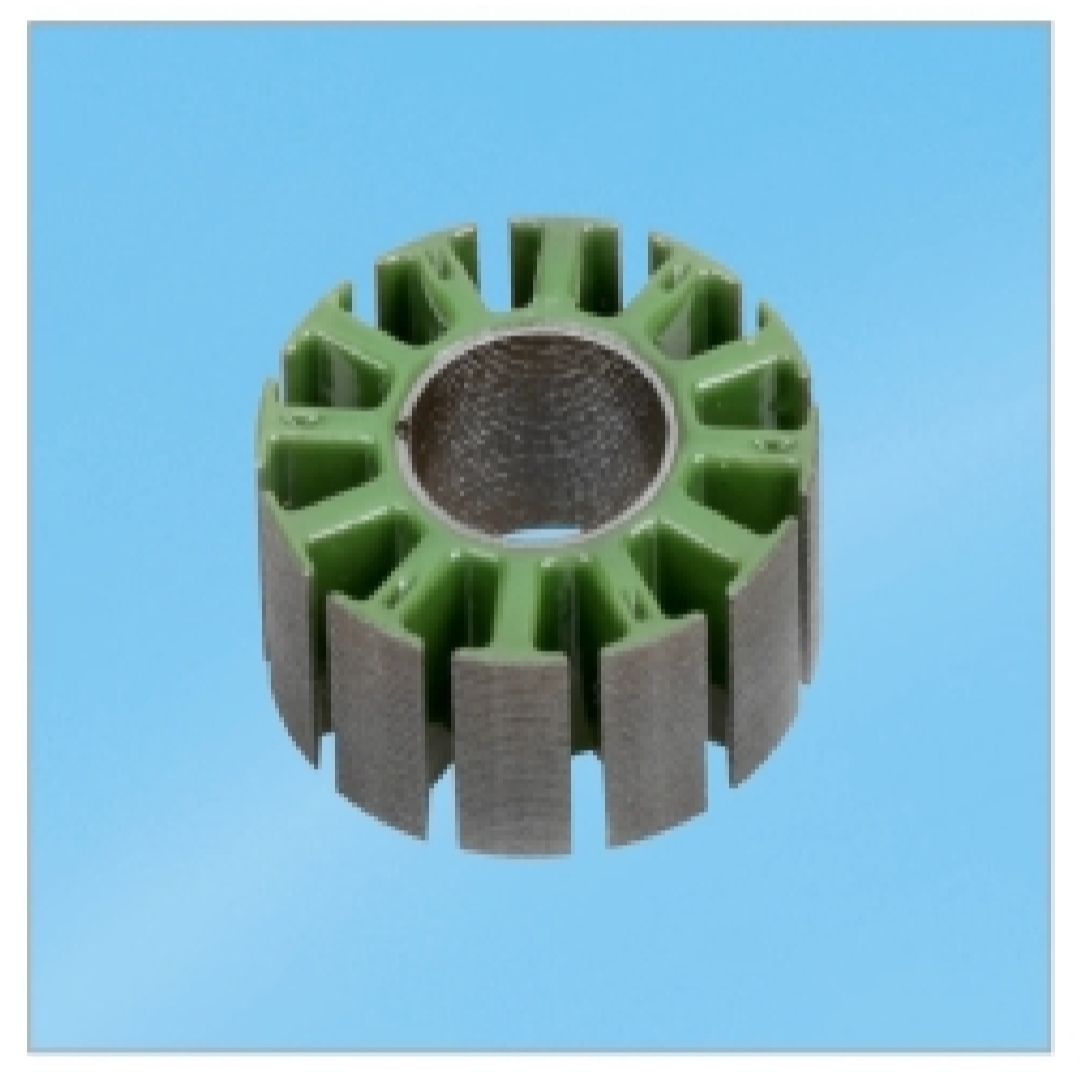
Here's why they hold such significance:
-
Unmatched High-Speed Capability:
-
Low Rotor Inertia: The rotating part (rotor with magnets) is compact and centrally located, minimizing its moment of inertia. This allows extremely rapid acceleration/deceleration and enables operation at very high RPMs (often 50,000+ RPM, even exceeding 100,000 RPM in specialized designs).
-
Reduced Centrifugal Stress: Magnets experience lower centrifugal forces at the smaller diameter compared to an outrunner at the same RPM, allowing higher safe operating speeds.
-
Application Criticality: Essential for applications like CNC spindles, high-speed machining, turbochargers, dental drills, centrifuges, and some power tools where raw speed is paramount.
-
-
Superior High-Speed Efficiency:
-
The design minimizes windage losses (air friction) at high speeds compared to the larger rotating outer shell of an outrunner.
-
Electromagnetic design is often optimized for peak efficiency in the high RPM range required by their target applications.
-
-
Effective Stator Cooling:
-
Heat is Generated in the Windings: The primary source of heat (copper losses and core losses) is in the stator windings.
-
Direct Cooling Path: Since the stator is the outer stationary component, it's directly attached to the motor housing. Heat can be efficiently conducted to the housing and dissipated via fins, forced air, liquid cooling jackets, or mounting surfaces.
-
Critical for Power Density: This efficient cooling allows inrunners to handle higher power levels in a compact size without overheating, crucial for demanding applications.
-
-
High Power Density (in Diameter-Constrained Applications):
-
Inrunners can pack significant power (especially at high speeds) into a relatively small diameter package. Their form factor is typically longer and narrower.
-
Why Important: This is vital where installation space limits diameter but allows length (e.g., inside cylindrical housings, embedded in machinery shafts, electric turbochargers in tight engine bays, high-performance RC cars with narrow chassis).
-
-
Mechanical Simplicity & Robustness:
-
Stationary Casing: The outer casing doesn't rotate, simplifying mounting, sealing, and integration with sensors or external gearboxes. Wiring to the stator is straightforward and robust.
-
Central Shaft: A single, robust output shaft is directly connected to the rotating core, ideal for direct coupling or precise power transmission.
-
Reduced Vibration Concerns: The compact, balanced rotor generally generates less vibration at very high speeds compared to larger outrunner rotors.
-
-
Complementing Outrunners in the BLDC Ecosystem:
-
Inrunners and outrunners represent a fundamental design trade-off:
-
Outrunners: Excel at high torque at lower RPMs (better for direct-drive wheels, drones, e-bikes).
-
Inrunners: Excel at high RPM with lower rotor inertia (better for spindles, high-speed tools, compressors).
-
-
Importance in Classification: This clear dichotomy allows engineers to rapidly select the optimal BLDC topology based on the primary requirement of the application (Speed vs. Torque). Without inrunners, the BLDC class would lack a high-speed optimized solution.
-
Key Applications Highlighting Their Importance:
-
CNC Machining Spindles: Require extreme RPM for precision cutting.
-
High-Speed Power Tools (Drills, Grinders, Routers): Need high RPM and rapid speed control.
-
Industrial Pumps & Compressors: Benefit from high-speed operation for flow/pressure.
-
Electric Turbochargers/Superchargers: Demand insane RPMs (>100,000 RPM) in a compact package.
-
High-Performance RC Models (Cars, Helicopters): Need high RPM and quick acceleration.
-
Dental & Surgical Handpieces: Require ultra-high speed and reliability.
-
Centrifuges & Laboratory Equipment: Depend on high rotational speeds.
In Summary:
The inrunner motor is indispensable in BLDC classification because it uniquely addresses the critical need for extreme high-speed operation, rapid acceleration, and efficient heat dissipation in a compact diameter. It fills a vital performance niche that outrunners cannot effectively cover, making the overall BLDC technology far more versatile and capable across a vast range of demanding industrial, commercial, and hobbyist applications. Its importance lies in solving specific high-speed, high-power-density engineering problems effectively and reliably.
How to make Inrunner Motor in BLDC Motor classification?
What is Inrunner Motor in BLDC Motor classification?
Related Article


