
Reenives: Global Leading Electric Stator Supplier
author: Zove
2026-07-06

Reenives: Global Leading DC Motor Stator Supplier
Reenives: Global Leading Hairpin Stator Supplier
Related Article

The first sign is usually gyro noise the pilot cannot tune out. Then a bearing goes, and the motor bell starts to wobble. By the time the quad is on the bench, the diagnosis reads “bearing failure” or “crashed bell” — but the root cause was set at the purchase order. In an FPV outrunner, the stator rotor pair is not two parts bolted together; it is one magnetic circuit separated by an air gap measured in tenths of a millimetre.
Reenives: Global Leading UAV FPV Drone Motor Stator Rotor One-Stop Solution Supplier
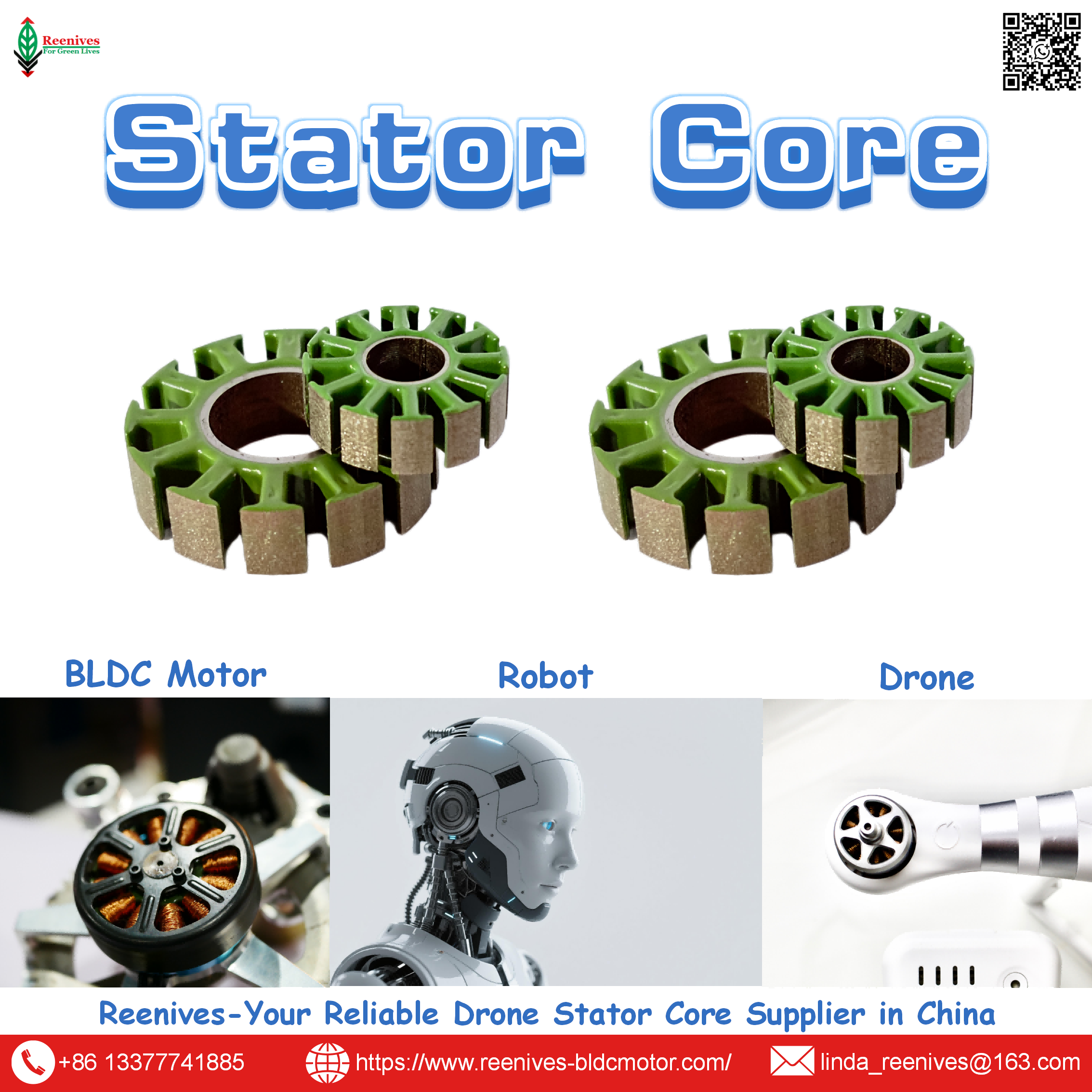
This guide explains exactly what a drone BLDC stator is, how it works, what materials and lamination thicknesses are used, and what to check before ordering. Backed by Reenives' manufacturing experience and 100+ R&D patents, this is the practical answer engineers and procurement teams need. Reenives is a professional drone stator core manufacturer supplying precision BLDC stators to 1000+ enterprises worldwide.
What is Drone BLDC Stator?
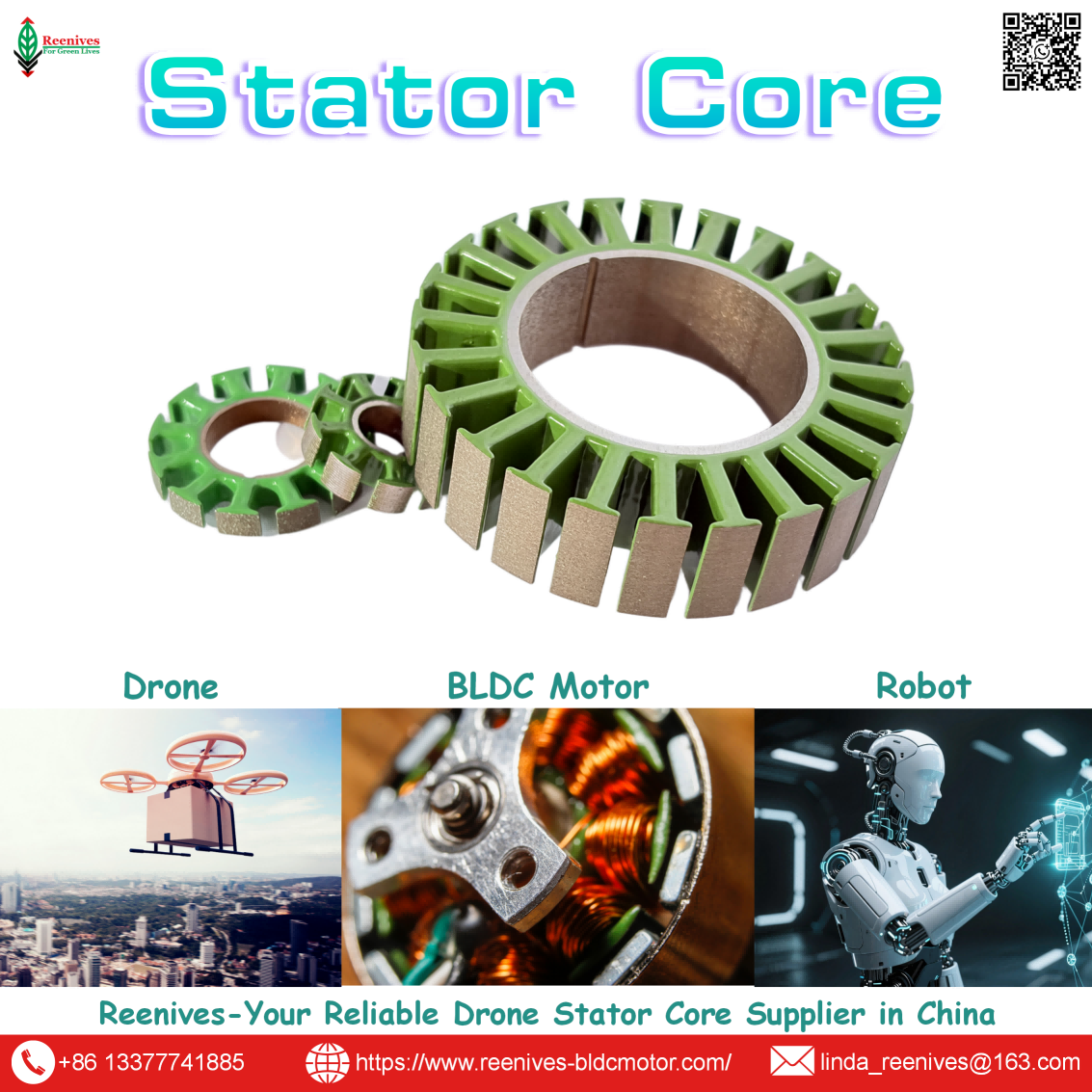
Your motor passes bench testing with acceptable efficiency, but at 6,000 RPM under continuous load the stator housing climbs past 90°C. Field returns show insulation breakdown at 200 hours instead of the expected 2,000. When failure analysis is completed, the verdict points back to the same place: the Electric Motor Laminations were not specified, stacked, or insulated to the standard the application demands.
What is Electric Motor Laminations?
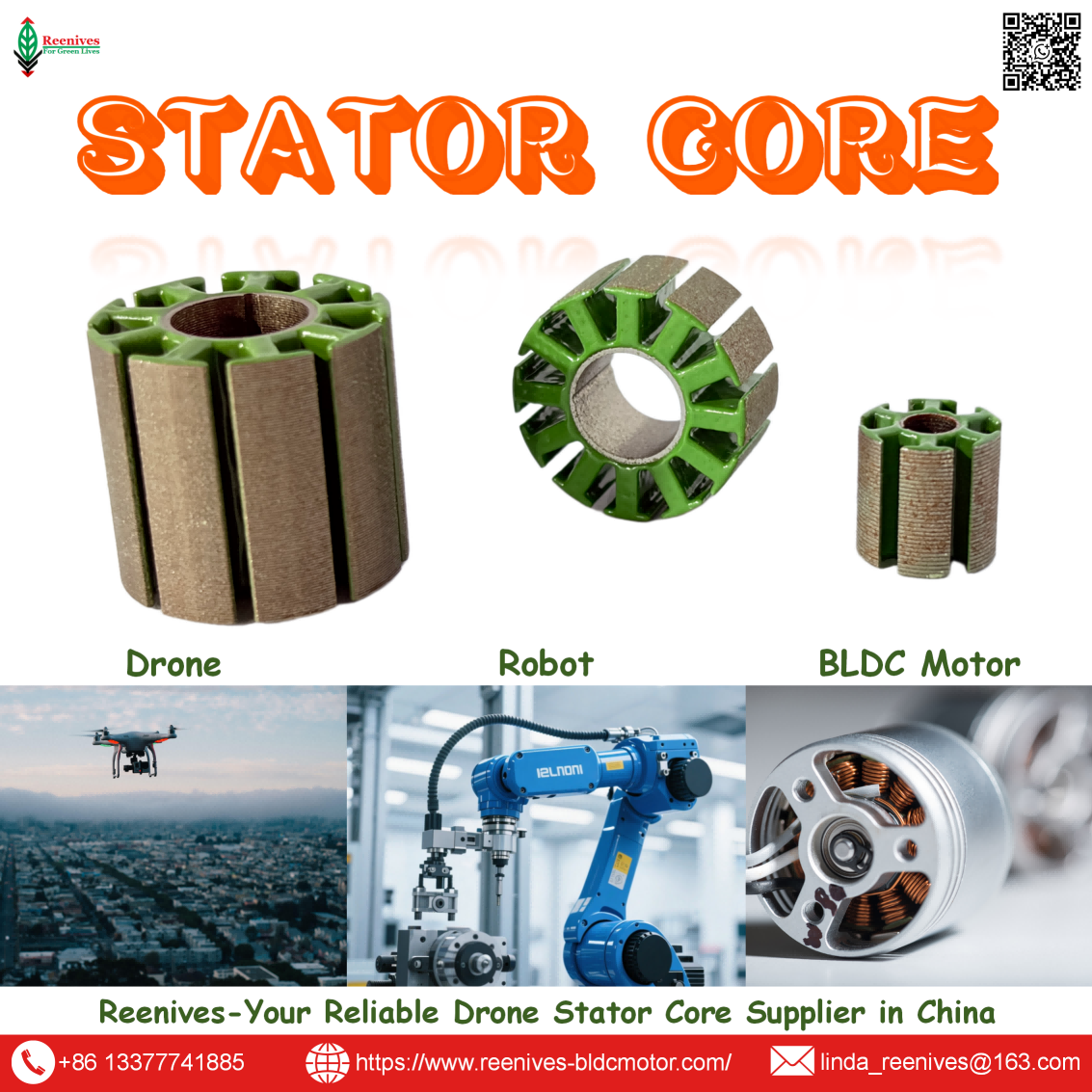
Your brushless motor passes incoming inspection, but in the field it runs hotter than the datasheet predicts. Thrust drops under sustained load, and the flight controller logs vibration that no amount of propeller balancing eliminates. When engineers dig into the failure analysis, the answer is often the same: the Motor Stator does not match the design intent.
What is Motor Stator?