
How to Make Defence Drone Motor Stator Core?
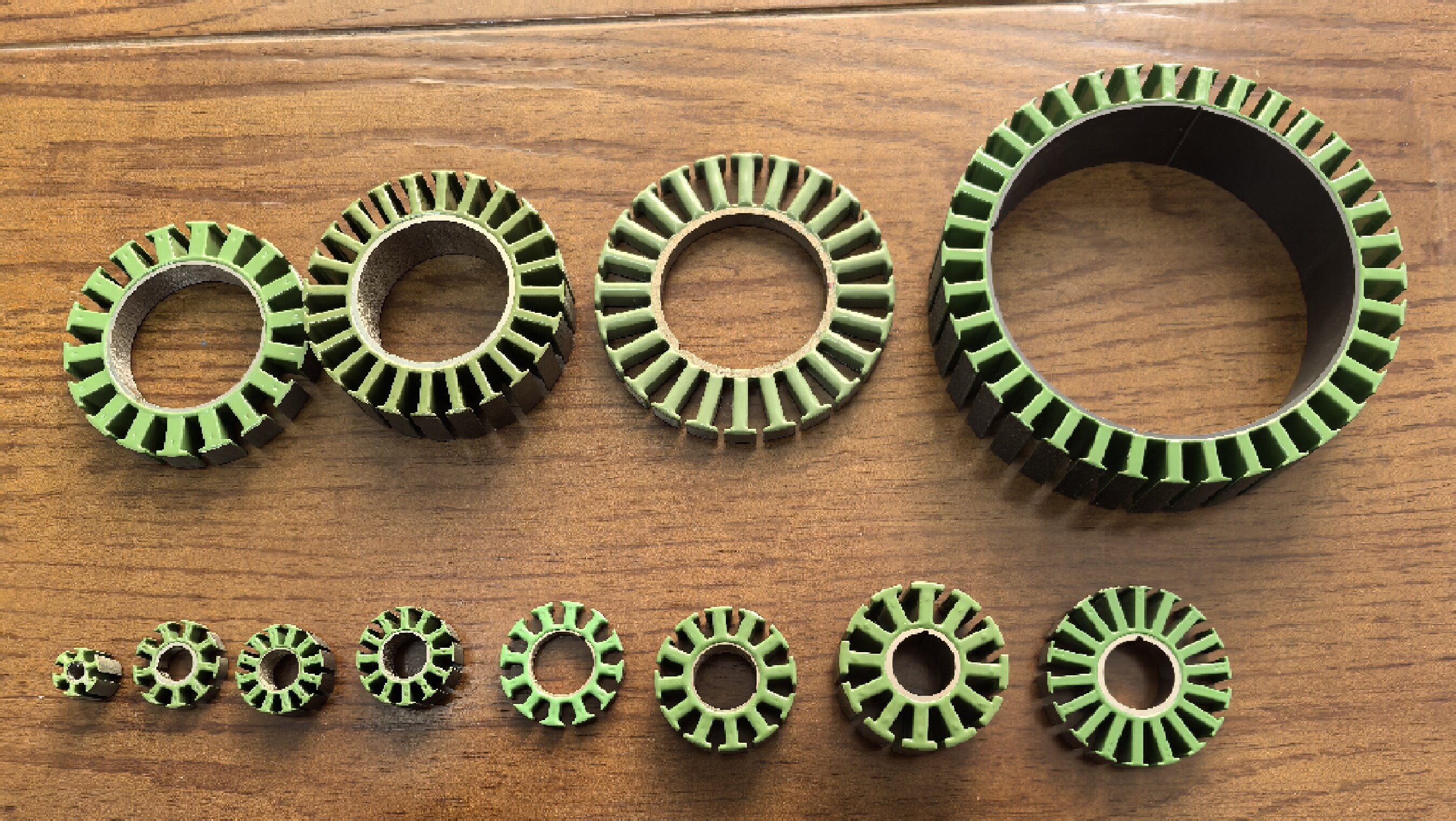
How to Make Defence Drone Motor Stator Core?
Table of Contents
-
Introduction to the Defence Drone Stator Core
-
Key Design & Material Considerations
-
Step-by-Step Manufacturing Process
-
H3: Material Selection & Preparation
-
H3: Precision Stamping of Laminations
-
H3: Stacking, Bonding & Heat Treatment
-
H3: Machining & Final Insulation
-
-
Defence vs. Civil Drone Stator Cores: A Comparative Analysis
-
Technical Specifications: Defence-Grade Stator Core Parameters
-
Expert Insights on Manufacturing Challenges
-
Industry FAQs
-
Conclusion and Further Reading
H1: Introduction to the Defence Drone Stator Core
The heart of any electric drone propulsion system is its motor, and at the core of that motor lies a critical component: the stator core. In defence applications, where missions involve surveillance, reconnaissance, payload delivery, or tactical operations, the performance requirements for drones escalate dramatically. Consequently, the Defence Drone Motor Stator Core is not just a simple piece of stacked steel; it is an engineering marvel designed for extreme reliability, efficiency, and power density under demanding conditions. This blog delves into the specialized process of manufacturing these high-stakes components, highlighting what sets them apart from their commercial counterparts.
H2: Key Design & Material Considerations
Before the first metal sheet is cut, the design philosophy for a defence-grade stator core is anchored in three pillars: extreme durability, superior electromagnetic efficiency, and operational consistency.
-
High-Frequency Performance: Defence motors often operate at very high RPMs to achieve rapid thrust response. The core material must have low core losses (hysteresis and eddy current losses) to minimize heat generation at these frequencies.
-
Thermal & Mechanical Resilience: The core must withstand significant thermal cycling and mechanical vibration without degradation of its magnetic or structural properties.
-
Precision Tolerances: Ultra-tight tolerances are non-negotiable for ensuring optimal air gaps, minimizing cogging torque, and achieving the smooth, efficient operation required for stable flight and precise control.
H2: Step-by-Step Manufacturing Process
H3: Material Selection & Preparation
The journey begins with selecting the right silicon steel (electrical steel). For defence cores, high-grade, thin-gauge (often 0.1mm to 0.2mm) non-oriented silicon steel (NOES) with a high silicon content is preferred. This material offers a superior balance of high magnetic permeability and low iron loss. The surface is treated with a high-quality insulating coating (C-5 or better) to resist interlaminar eddy currents.
H3: Precision Stamping of Laminations
This is a stage where precision is paramount. Using progressive dies in high-precision stamping presses, the stator laminations are punched out. Defence-grade manufacturing requires hardened tool steel dies and controlled environments to ensure each lamination is burr-free and dimensionally identical. Any variation here leads to inefficiency and vibration.
H3: Stacking, Bonding & Heat Treatment
The laminations are stacked to the exact designed height. Unlike some civil cores that may use simple interlocking, defence cores often employ precise welding (laser welding), adhesive bonding, or riveting under high pressure. This creates a rigid, unitary stack that prevents shifting under high torque and vibration. A stress-relief annealing process in a controlled atmosphere furnace follows. This critical step removes stresses induced during stamping and stacking, restoring the magnetic properties of the steel.
H3: Machining & Final Insulation
After annealing, the core undergoes final CNC machining to achieve perfect concentricity and mounting surface tolerances. The slots are deburred and cleaned meticulously. Finally, a high-temperature, chemically resistant insulating resin may be applied or the core is ready for the insertion of high-class magnet wire (often polyimide or ceramic coated) for winding.
H2: Defence vs. Civil Drone Stator Core: A Comparative Analysis
| Feature | Defence Drone Stator Core | Civil/Commercial Drone Stator Core |
|---|---|---|
| Primary Driver | Maximum Reliability & Performance | Cost-Efficiency & Adequate Performance |
| Material | Thin, high-grade NOES; Premium insulation. | Standard or medium-grade NOES; Standard insulation. |
| Tolerances | Ultra-tight, micron-level. | Standard, commercially viable. |
| Manufacturing Process | Precision stamping, stress-relief annealing, bonding, CNC machining. | High-speed stamping, automated stacking, may skip annealing. |
| Thermal Management | Designed for extreme thermal cycles, high ambient temps. | Designed for typical operating temperature ranges. |
| Durability Testing | Subject to MIL-SPEC or rigorous environmental testing (vibration, shock, temp). | Basic performance and endurance testing. |
| Cost | High (driven by material and precision processes). | Low to Moderate (optimized for mass production). |
H2: Technical Specifications: Defence-Grade Stator Core Parameters
Here is a table outlining common parameter ranges for defence-application stator cores:
| Parameter | Typical Range/Specification | Notes |
|---|---|---|
| Outer Diameter (OD) | 20 mm - 80 mm | Size scales with motor power and UAV class. |
| Inner Diameter (ID) | 10 mm - 50 mm | Precision-machined for perfect rotor alignment. |
| Stack Height | 5 mm - 25 mm | Directly related to torque output. |
| Lamination Thickness | 0.1 mm - 0.2 mm | Thinner = lower eddy current loss at high RPM. |
| Material Grade | M250-35A, M330-35A, or equivalent high-grade NOES. | Denotes core loss (e.g., <2.5 W/kg @ 1.0T/400Hz). |
| Slot Number | 9, 12, 15, 18 | Optimized for electromagnetic performance & winding. |
| Insulation Class | Class H (180°C) or higher (200°C+). | For high-temperature operation. |
| Tolerance (Concentricity) | ≤ 0.02 mm | Critical for minimizing vibration and noise. |
H2: Expert Insights on Manufacturing Challenges
Dr. Eleanor Vance, a materials scientist specializing in aerospace propulsion, notes: "The leap from civil to defence stator cores is often underestimated. The greatest challenge isn't achieving peak performance in a lab, but ensuring batch-to-batch consistency under simulated battlefield conditions—extreme cold, desert heat, and constant vibration. The stress-relief annealing process is the most critical yet delicate step; an error here can nullify all previous precision work, leading to a core with elevated losses and reduced service life."
H2: Industry FAQs
Q1: Why can't we just use a high-performance civil drone stator core for defence applications?
A: While high-end civil cores are excellent, they are not typically subjected to the same rigorous environmental stress screening (ESS) or designed for the same lifespan under extreme conditions. Defence cores are engineered with a higher derating margin and guaranteed performance across a wider operational envelope.
Q2: Is additive manufacturing (3D printing) used for making these cores?
A: Currently, no. Laminated silicon steel remains vastly superior in magnetic performance for rotating machines. Additive manufacturing may be used for prototyping or creating housing components, but the stator core itself relies on the proven performance of precision-stacked electrical steel laminations.
Q3: What is the biggest cost driver in defence stator core production?
A: The twin drivers are raw material cost (high-grade silicon steel) and the capital and time investment in precision processes like fine blanking, controlled atmosphere annealing, and ultra-precise machining. The quality control and testing regimen also adds significant cost.
Q4: How does the process differ from making an FPV racing drone stator core?
A: The fundamental steps are similar, but the emphasis shifts dramatically. For an in-depth look at the priorities for high-RPM, lightweight FPV cores, you can refer to our previous blog: How to Make UAV FPV Drone Stator Core?. In summary, FPV cores prioritize ultra-low inertia and rapid heat dissipation for burst power, while defence cores prioritize long-term resilience, consistency, and reliability under diverse stresses.
H1: Conclusion
Manufacturing a Defence Drone Motor Stator Core is a symphony of advanced materials science, precision engineering, and rigorous quality control. It represents a commitment to building a component where failure is not an option. Every step—from selecting the perfect alloy to the final precision grind—is optimized to deliver unmatched power, efficiency, and reliability, ensuring that the drone motor performs flawlessly when it matters most. For designers and engineers in the defence sector, understanding and specifying this critical component is fundamental to mission success.
What is Iron Loss or Core Loss in Drone Motor Stator Core?
Why Stator Core is Important for Defence Drone Motor?
Related Article


