
How to make sweeping robot BLDC Motor?
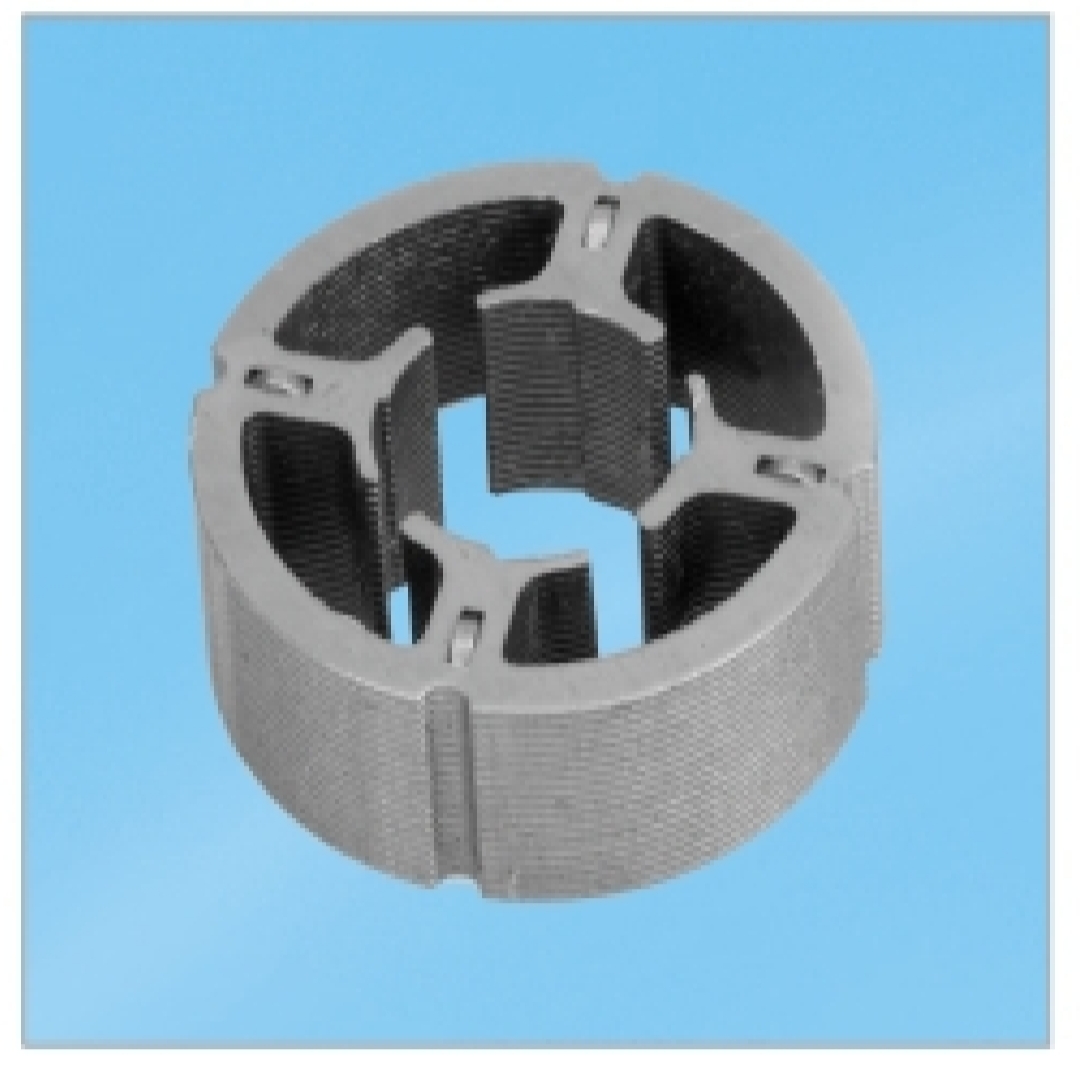
Here's a breakdown of how it's done professionally:
Core Components of a Sweeping Robot BLDC Motor:
-
Stator:
-
Laminated Steel Core: Stacked thin steel sheets (to reduce eddy currents) with slots.
-
Windings: Precisely wound copper wire coils inserted into the stator slots. The number of phases (almost always 3), turns per coil, and wire gauge are critical design choices impacting power, torque, and efficiency.
-
Insulation: High-temperature enamel coating on wires and slot liners/insulators to prevent shorts.
-
-
Rotor:
-
Permanent Magnets: High-strength Neodymium-Iron-Boron (NdFeB) magnets arranged in a specific pole pattern (e.g., 4-pole, 6-pole, 8-pole) around the rotor core. Magnet shape (arc, rectangular) and grade (e.g., N52) affect performance.
-
Rotor Core: Typically steel laminations or a solid steel hub to hold the magnets and provide a magnetic path.
-
Shaft: Precision-machined steel shaft transmitting torque to the impeller or brush.
-
Retention: A sleeve (often stainless steel or carbon fiber) or adhesive bonding to hold the magnets securely against centrifugal force at high RPM.
-
-
Sensors (Usually Hall Effect):
-
Small sensors mounted on a PCB near the rotor, detecting magnet position to tell the Electronic Speed Controller (ESC) when to switch current to the next phase.
-
-
Bearings:
-
High-precision, long-life ball bearings supporting the shaft for smooth, low-friction rotation.
-
-
Housing:
-
Typically aluminum for good heat dissipation and strength-to-weight ratio. Includes mounting points and often cooling fins.
-
-
Connectors:
-
For power (3 phases) and sensor signals (usually 5 wires: 3 Hall sensor outputs + 5V + GND).
-
Key Manufacturing Steps:
-
Stator Manufacturing:
-
Core Stacking: Laminations are stamped and precisely stacked/interlocked.
-
Winding: Automated winding machines insert copper wire into the stator slots according to the exact winding pattern (e.g., concentrated or distributed windings). This requires specialized equipment.
-
Impregnation (Varnishing): The wound stator is dipped in high-temperature insulating varnish and baked to solidify it. This secures the windings, improves heat transfer, and enhances insulation.
-
-
Rotor Manufacturing:
-
Core Machining: The rotor core hub is machined.
-
Magnet Bonding: Magnets are precisely positioned and bonded to the rotor core using high-strength adhesives or mechanical sleeves. Magnetization often happens after bonding using a powerful magnetizer.
-
-
Assembly:
-
Bearings are pressed into the housing.
-
The stator is pressed or secured into the housing.
-
The rotor shaft (with bearings pre-installed) is carefully inserted into the stator bore, ensuring minimal air gap (critical for efficiency).
-
The Hall sensor PCB is mounted and aligned precisely relative to the rotor magnets.
-
End caps or covers are secured (often with screws or crimping).
-
Connectors are attached.
-
-
Testing & Balancing:
-
Electrical Testing: Checks for short circuits, open circuits, insulation resistance, and Hall sensor functionality.
-
Performance Testing: Measures no-load speed, current, resistance, and back-EMF constant (Kv).
-
Dynamic Balancing: The rotor assembly is spun at high speed, and material is removed (or added) to eliminate vibration – crucial for quiet operation and bearing life at 20,000+ RPM. This is done on precision balancing machines.
-
Design Considerations SPECIFIC to Sweeping Robots:
-
Compact Size & Low Weight: Must fit within the robot's slim profile and not add excessive weight that drains the battery.
-
High Efficiency: Maximizing runtime per battery charge is paramount. Optimizing electromagnetic design and minimizing losses (copper, iron, friction) is critical.
-
High Speed & Power Density: Suction motors need very high RPM (often 20,000 - 40,000+). Brush motors need high torque at lower speeds. Both need significant power in a tiny package.
-
Thermal Management: Efficient heat dissipation (via housing design, material choice, and stator impregnation) is vital to prevent overheating during long cycles.
-
Acoustic Noise & Vibration: Careful electromagnetic design, precise manufacturing tolerances, and dynamic balancing are essential for quiet operation.
-
Durability & Reliability: Must withstand years of daily starts/stops, vibration, and dust exposure. Bearings and magnet retention are critical.
-
Cost: Must be manufacturable at a cost suitable for a consumer appliance.
Why You (Probably) Can't "Make" One Yourself:
-
Specialized Materials: Sourcing high-grade NdFeB magnets, specific lamination steel, high-temp enameled wire, and specialized varnishes is difficult and expensive in small quantities.
-
Precision Manufacturing Equipment: Requires CNC machines, precision stamping dies, automated winding machines, impregnation tanks/ovens, dynamic balancers, magnetizers, and rigorous quality control. This costs millions.
-
Electromagnetic Design Expertise: Optimizing the stator/rotor geometry, winding pattern, magnet configuration, and materials for the specific power, speed, torque, and efficiency requirements requires sophisticated FEA simulation software and experienced motor design engineers.
-
Balancing & Tolerances: Achieving the micron-level tolerances and perfect balance needed for smooth, quiet, high-RPM operation is far beyond typical workshop capabilities.
Practical Alternatives for Makers/Hobbyists:
-
Buy Off-The-Shelf BLDC Motors: Purchase small BLDC motors designed for drones, RC cars, or other applications. Look for specs matching your needs (Kv rating, voltage, size, power). This is the most realistic approach.
-
Buy Integrated Modules: Some suppliers offer motors with integrated ESCs, simplifying control.
-
Use Development Kits: Motor manufacturers sometimes offer evaluation kits with motors and ESCs for prototyping.
-
Focus on Integration & Control: Instead of building the motor, focus on:
-
Selecting the right pre-made motor for your robot.
-
Designing/selecting the ESC (or buying one compatible with your motor).
-
Integrating the motor/ESC with your robot's microcontroller (MCU) and power system (battery).
-
Writing firmware to control speed based on sensors (e.g., carpet detection).
-
In summary: While understanding the components and manufacturing process of a sweeping robot BLDC motor is valuable, actually making one requires industrial-scale resources, specialized expertise, and significant capital investment. For practical purposes, selecting and integrating a high-quality off-the-shelf BLDC motor paired with a suitable ESC is the feasible approach for any development or hobby project.
What is shaver BLDC Motor?
Why BLDC Motor is important in sweeping robot?
Related Article


