
Why Stator Core is Important for Defence Drone Motor?
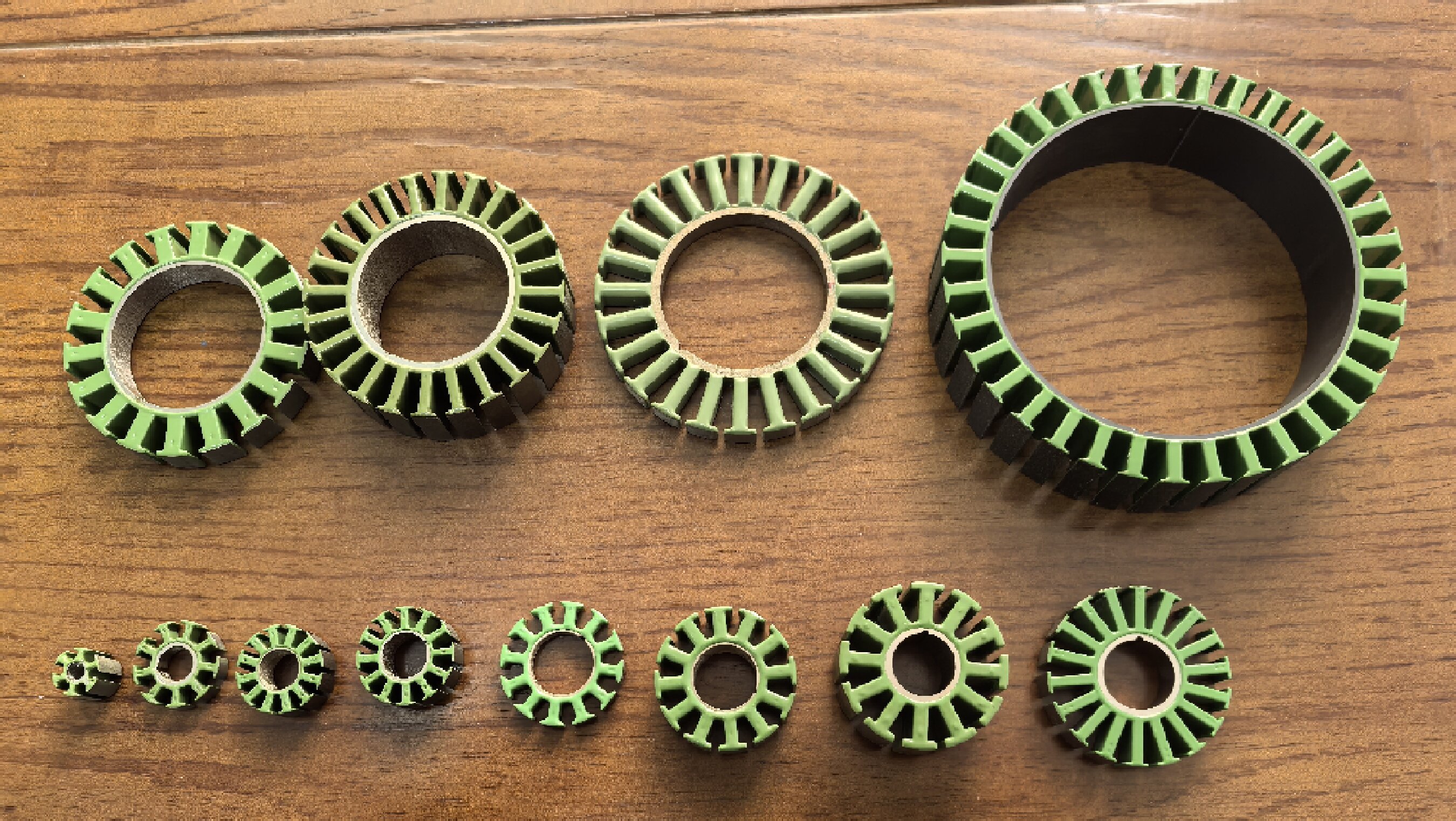
H1: Why the Stator Core is the Heart of a Defence Drone Motor
Table of Contents
-
Introduction: More Than Just a Motor Component
-
H2: The Critical Role of the Stator Core in Any Drone Motor
-
H2: Extreme Demands of Defence Drone Motors
-
H3: Key Stator Core Differences: Defence vs. Civilian Drones
-
H4: Material and Manufacturing Precision
-
H4: Thermal and Power Density Management
-
H4: Ruggedness and Environmental Sealing
-
-
H2: Comparative Analysis: Stator Core Parameters
-
H2: Expert Insight: The Stator as a Strategic Component
-
H2: Linking Theory to Practice: How Are They Made?
-
H2: Frequently Asked Questions (FAQs)
-
Conclusion: An Uncompromising Foundation
H2: Introduction: More Than Just a Motor Component
In the world of unmanned aerial vehicles (UAVs), the motor is the muscle. But for defence drone motors, performance is non-negotiable. It’s about reliability in hostile environments, maximum power for evasive maneuvers, and unwavering endurance. At the absolute center of this high-performance motor lies a component often overlooked: the stator core. This isn't just a piece of laminated metal; it's the foundational element that dictates efficiency, power, and ultimately, mission success. This blog delves into why the stator core is disproportionately important for defence applications and how it differs from its civilian counterpart.
H2: The Critical Role of the Stator Core in Any Drone Motor
The stator core is the stationary part of an electric motor’s electromagnetic circuit. Its primary functions are:
-
To house the copper windings that create a rotating magnetic field when energized.
-
To provide a high-permeability, low-loss path for magnetic flux, concentrating the magnetic force to interact with the rotor’s magnets.
A well-designed stator core minimizes energy losses (like eddy currents and hysteresis loss), directly translating to longer flight times, cooler motor operation, and more available power—all critical for any drone.
H2: Extreme Demands of Defence Drone Motors
Civilian drones prioritize cost, adequate performance, and good efficiency. Defence drones operate under a different paradigm:
-
Maximum Power & Torque Density: Required for rapid acceleration, high-speed dash, and carrying heavy payloads (sensors, comms, munitions).
-
Exceptional Reliability & Redundancy: Failure is not an option during critical intelligence, surveillance, reconnaissance (ISR), or tactical missions.
-
Harsh Environment Operation: Motors must perform in extreme temperatures, high humidity, sand, dust, and resist corrosion.
-
Electromagnetic Compatibility (EMC): Low electromagnetic interference is crucial to avoid disrupting the drone’s own sensitive electronics and for stealth.
-
Lightweight Construction: Every gram saved extends range or allows for more critical payload.
The stator core is fundamental to meeting every one of these demands.
H2: Key Stator Core Differences: Defence vs. Civilian Drones
H3: Material and Manufacturing Precision
-
Civil Drone Stator Core: Often uses standard, cost-effective silicon steel laminations (e.g., 50WW350). Tolerances are good but optimized for high-volume, low-cost production.
-
Defence Drone Motor Stator Core: Uses premium, thin-gauge silicon steel (e.g., 0.1mm or 0.15mm thickness) or even cobalt-iron alloys for superior high-frequency performance. Laminations are stamped or laser-cut with micrometer-level precision to ensure perfect slot geometry and minimal air gaps, directly reducing losses and vibration.
H3: Thermal and Power Density Management
-
Civil Drone Stator Core: Designed for typical duty cycles. Cooling often relies on passive airflow.
-
Defence Drone Motor Stator Core: Engineered for peak continuous power. Advanced cooling strategies like direct oil cooling or integrated coolant jackets are common. The lamination material and insulation coating must withstand much higher temperatures (Class H: 180°C+) without degrading. This allows the motor to sustain extreme loads without demagnetizing or failing.
H3: Ruggedness and Environmental Sealing
-
Civil Drone Stator Core: May have basic varnish dipping for moisture resistance.
-
Defence Drone Motor Stator Core: Undergoes vacuum pressure impregnation (VPI) with high-grade epoxy. This completely seals the windings and laminations against moisture, salt spray, and contaminants, ensuring performance in Arctic cold or tropical humidity. The entire assembly is often potted or housed in a ruggedized casing.
H2: Comparative Analysis: Stator Core Parameters
The table below summarizes typical differences:
| Parameter | Typical Civil Drone Motor Stator Core | Typical Defence Drone Motor Stator Core |
|---|---|---|
| Lamination Material | Standard Silicon Steel (e.g., 0.2mm, 35JN250) | Premium Thin-Gauge Si-Steel or Cobalt-Iron (e.g., 0.1mm, 1J22) |
| Core Loss | Higher (acceptable for consumer duty cycles) | Minimized for peak efficiency and thermal management |
| Manufacturing Tolerance | Good (tens of microns) | Extremely High (single-digit microns) |
| Insulation/Impregnation | Standard Varnish Dip | Vacuum Pressure Impregnation (VPI) with Aerospace-grade Resin |
| Thermal Rating | Class B (130°C) / Class F (155°C) | Class H (180°C) or Higher |
| Cooling Method | Primarily Air-cooled | Advanced (Liquid, Oil, Forced Air Ducting) |
| Primary Design Driver | Cost-Efficiency, Good Performance | Performance, Reliability, & Durability, Cost Secondary |
| EMI/RFI Suppression | Basic filtering | Integral Design with shielding considerations |
H2: Expert Insight: The Stator as a Strategic Component
Dr. Elena Vance, Lead Electromechanical Engineer at AeroDyn Systems, states: "In defence UAV programs, we don’t ‘select’ a motor; we co-develop the propulsion system as a mission-critical subsystem. The stator core is the starting point. Its material and geometry define the electromagnetic ceiling of the motor. A core with ultra-low loss allows us to push torque density 20-30% higher for the same thermal budget, which can mean the difference between a successful evasive action or not. It’s an enabler for overall platform capability."
H2: Linking Theory to Practice: How Are They Made?
Understanding why the stator core is so important naturally leads to the question: how is such a precision component manufactured? The processes for creating these cores involve precision stamping, advanced stacking, and rigorous quality control. For a detailed, step-by-step exploration of the manufacturing journey—from silicon steel coil to a finished, impregnated stator—please refer to our in-depth blog: How to Make UAV Motor Stator Core?. That piece provides crucial context for the engineering challenges involved in meeting the defence-grade standards discussed here.
H2: Frequently Asked Questions (FAQs)
Q1: Can a high-end civilian drone stator core be used in a defence application?
A: Rarely. While it might physically fit, it would likely lack the necessary thermal resilience, power density, and environmental sealing, leading to premature failure or underperformance under defence mission profiles.
Q2: Why are defence-grade stator cores so much more expensive?
A: The cost comes from premium materials (thin-gauge, low-loss steel), extreme precision manufacturing, specialized impregnation processes, and rigorous testing and certification (e.g., MIL-STD-810). The value is in unmatched reliability and performance.
Q3: Is the primary benefit just higher power?
A: Not just. While power is key, the core benefits are systemic: higher efficiency extends range, better thermal management increases reliability, and reduced losses allow for smaller, lighter motors—a critical advantage in aerospace design.
Q4: How does the stator core affect electromagnetic stealth?
A: A precisely made, well-impregnated core generates less parasitic high-frequency noise (EMI). This reduces the motor’s electromagnetic signature, making the drone harder to detect via electronic surveillance.
H2: Conclusion: An Uncompromising Foundation
For defence drones, where every watt of power, every degree of temperature, and every gram of weight is strategically accounted for, the stator core is far from a passive component. It is the electromagnetic and thermal bedrock of the propulsion system. Investing in a high-performance, defence-optimized stator core is not an exercise in over-engineering; it is a fundamental requirement to ensure the motor—and by extension, the UAV—can meet the severe, non-negotiable demands of modern defence and security operations. The choice of stator core ultimately reflects the priority of the mission: cost or capability.
How to Make Defence Drone Motor Stator Core?
What is Defence Drone Motor Stator Core?
Related Article


