Reenives: Global Leading Synchronous Motor Stator Core Supplier
author: Zove
2026-06-28
Reenives: Global Leading Axial Stator Core Supplier
Reenives: Global Leading Robot&Drone Motor Stator Winding Service Supplier
Related Article
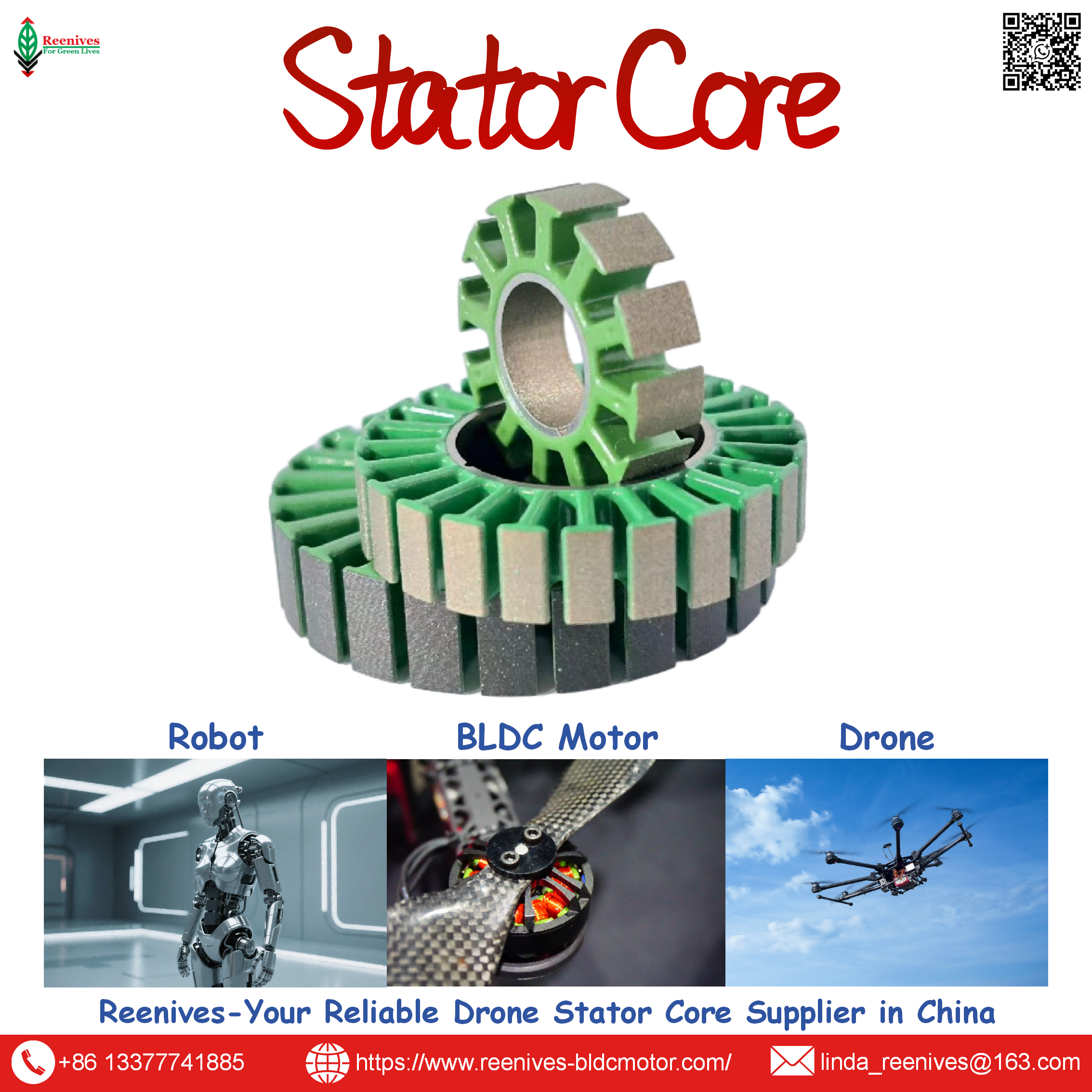
The stator production line is where the steel datasheet either survives or dies. A buyer specifies 0.20 mm low-loss non-oriented silicon steel, receives a mill certificate with an impressive core-loss figure, and then installs a stator that runs 15°C hotter than the simulation predicted. The material was correct. The production line was not.
Reenives: Global Leading Drone Motor Production Line Supplier

The first sign is usually gyro noise the pilot cannot tune out. Then a bearing goes, and the motor bell starts to wobble. By the time the quad is on the bench, the diagnosis reads “bearing failure” or “crashed bell” — but the root cause was set at the purchase order. In an FPV outrunner, the stator rotor pair is not two parts bolted together; it is one magnetic circuit separated by an air gap measured in tenths of a millimetre.
Reenives: Global Leading UAV FPV Drone Motor Stator Rotor One-Stop Solution Supplier
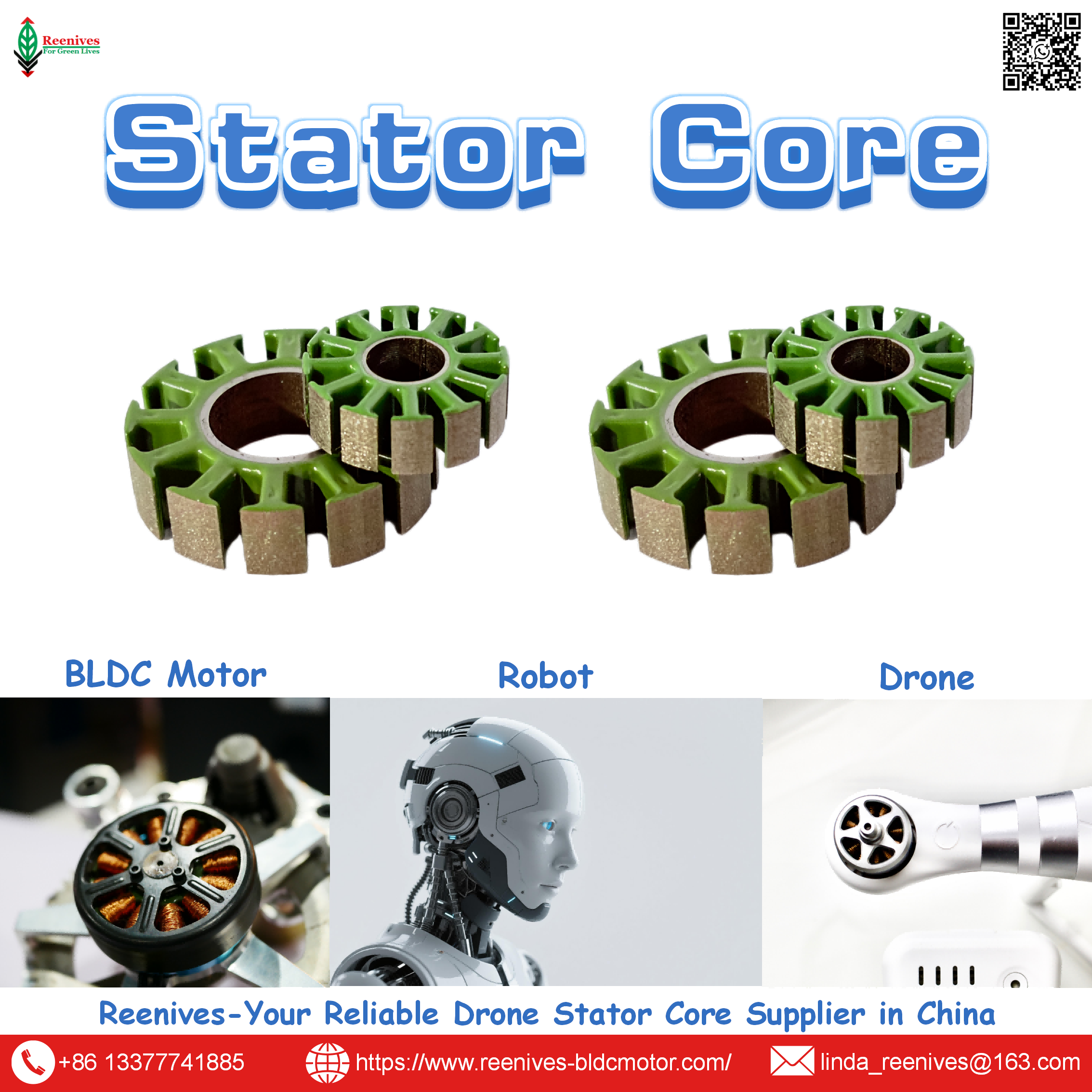
This guide explains exactly what a drone BLDC stator is, how it works, what materials and lamination thicknesses are used, and what to check before ordering. Backed by Reenives' manufacturing experience and 100+ R&D patents, this is the practical answer engineers and procurement teams need. Reenives is a professional drone stator core manufacturer supplying precision BLDC stators to 1000+ enterprises worldwide.
What is Drone BLDC Stator?
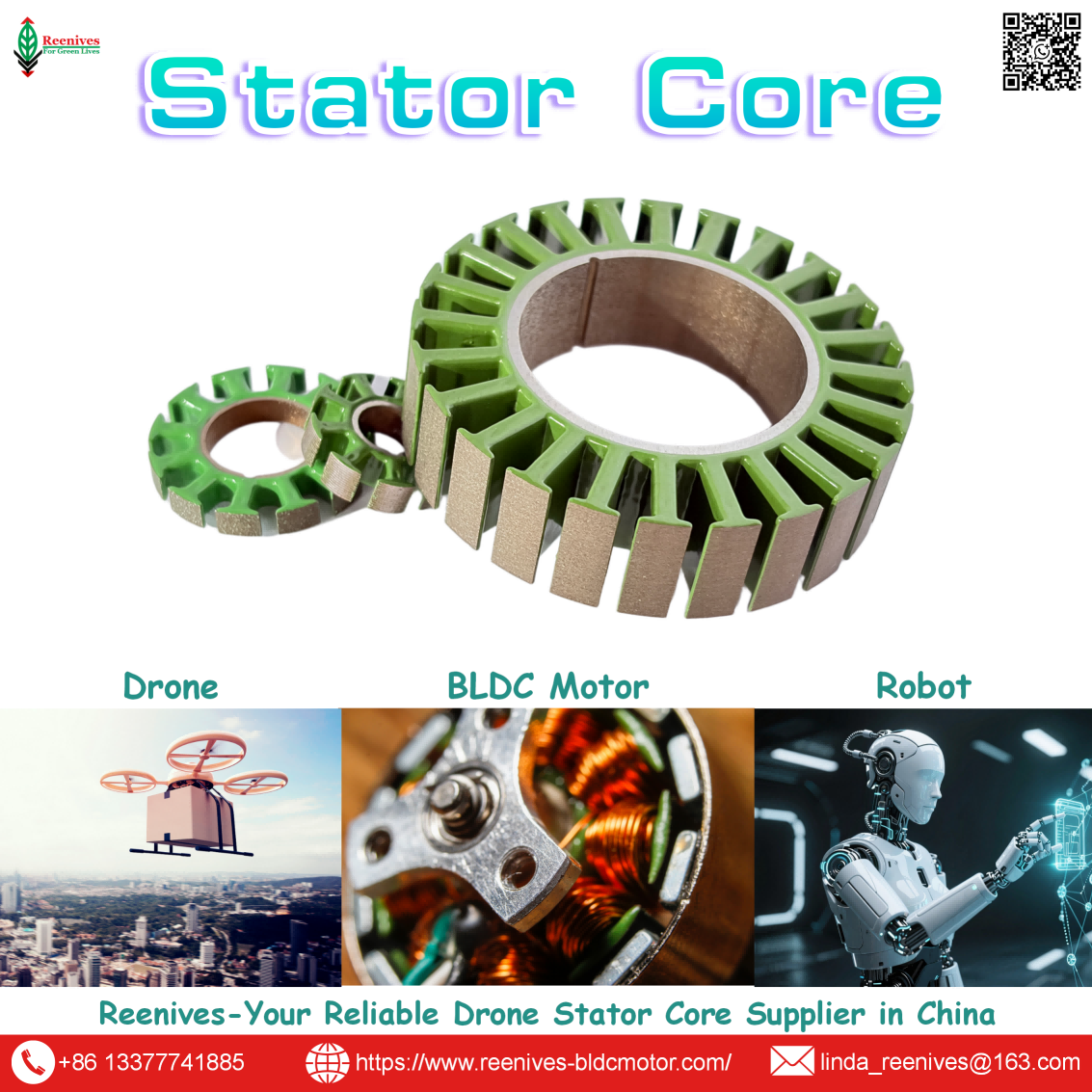
Your motor passes bench testing with acceptable efficiency, but at 6,000 RPM under continuous load the stator housing climbs past 90°C. Field returns show insulation breakdown at 200 hours instead of the expected 2,000. When failure analysis is completed, the verdict points back to the same place: the Electric Motor Laminations were not specified, stacked, or insulated to the standard the application demands.
What is Electric Motor Laminations?