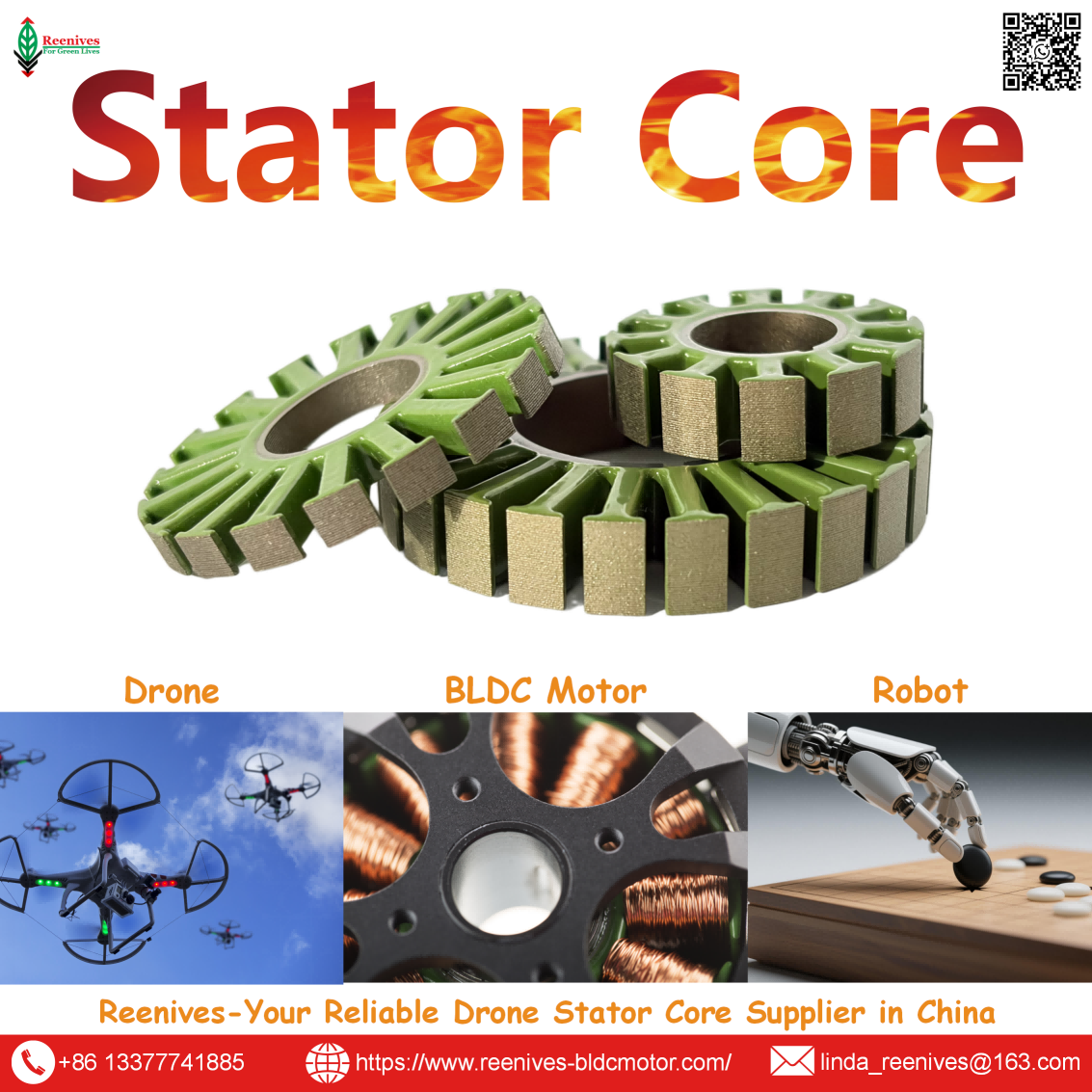
Drone Propulsion System Stator Rotor Stamping Die Supplier
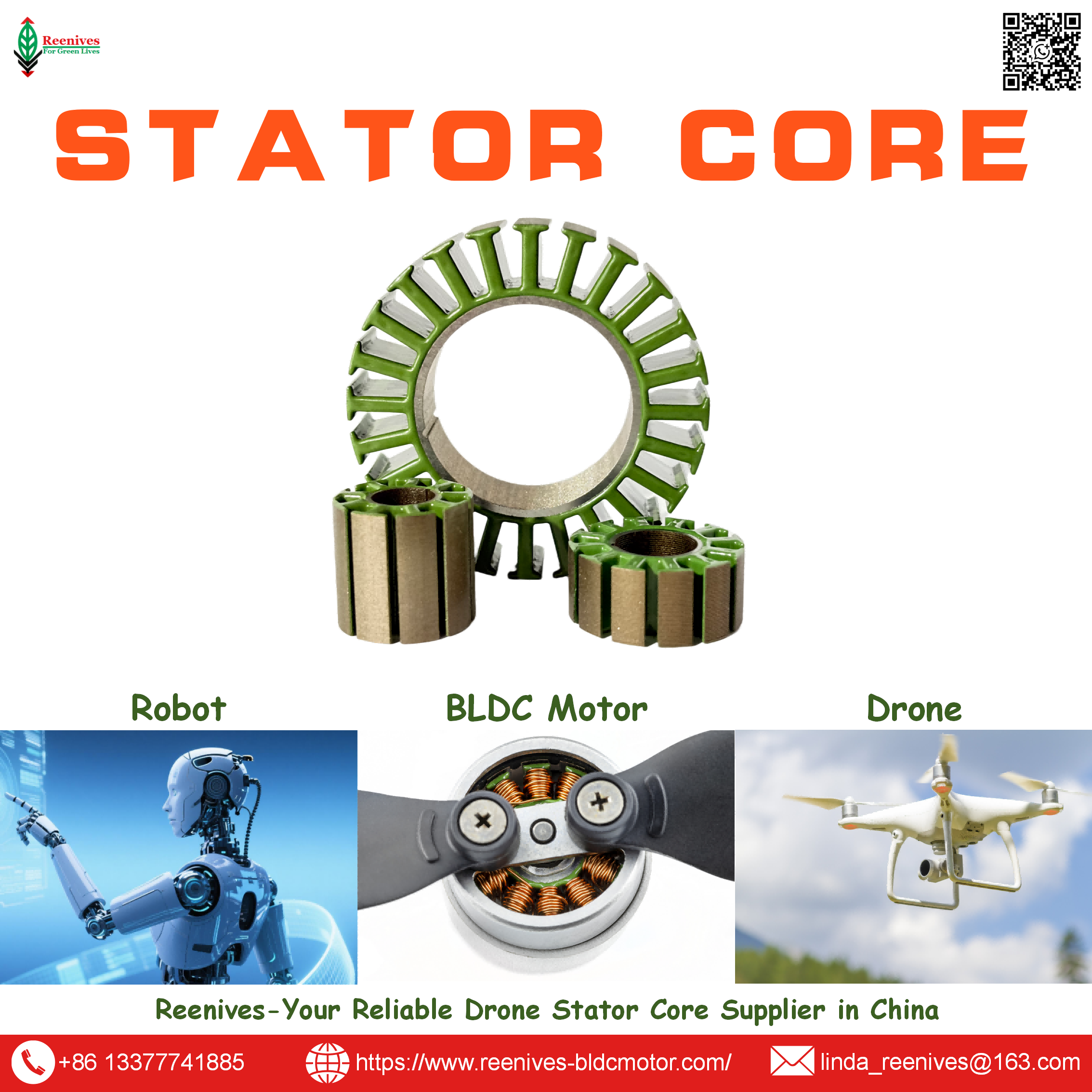
Stator Rotor Stamping Die – Precision Tooling for Drone Propulsion System Core Production
Drone propulsion production bottlenecks? Inconsistent lamination quality? Tooling wear causing downtime? A stator rotor stamping die is the precision tooling that forms the magnetic cores at the heart of every drone propulsion motor—determining the quality, consistency, and throughput of millions of laminations. As a specialist drone propulsion system stator rotor stamping die supplier, Reenives delivers progressive stamping dies engineered for 0.2mm ultra-thin silicon steel, with burr height < 0.03mm, 150+ million stroke life, and precision in-die interlocks—enabling high-speed, high-accuracy production of stator and rotor cores for UAV, FPV, and eVTOL propulsion applications.
- • What Is a Stator Rotor Stamping Die?
- • Classification of Stator Rotor Stamping Dies
- • Technical Specifications & Verified Data
- • Applications: Drone Propulsion, UAV, FPV, eVTOL & More
- • 6-Step Engineering Selection Guide for Stator Rotor Stamping Dies
- • FAQ: Stator Rotor Stamping Die Technical Questions
- • Why Reenives – Drone Propulsion System Stator Rotor Stamping Die Supplier
- • Dongguan Runlu Motor Technology Co., Ltd.
What Is a Stator Rotor Stamping Die?
A stator rotor stamping die is a precision tooling system used in progressive stamping presses to punch and form stator and rotor laminations from thin electrical steel strip. These dies are the cornerstone of high-volume drone propulsion core manufacturing, converting coiled silicon steel into precision laminations at speeds of 250–300 strokes per minute.
What a stator rotor stamping die does for drone propulsion:
- Progressive punching – Multiple stations perform sequential operations: pilot holes, slotting, contour punching, and blanking
- In-die stacking – Interlocking lamination technology stacks individual sheets into finished cores within the die
- Burr control – Precision clearances maintain burr height below 0.03mm to protect winding insulation
- High-speed operation – Engineered for 250–400+ SPM, enabling millions of laminations per die life
ⓘ Die engineering insight: "For drone propulsion manufacturing, a high-quality stator rotor stamping die is the most critical investment—determining both product quality and production economics for millions of motor cores."
Reenives manufactures precision stator rotor stamping dies for drone propulsion systems using premium tool steels (tungsten carbide, SKD11, ASP-60), high-speed gripper feeder-compatible designs, and 0.001–0.003mm tolerance capability—enabling high-volume production of consistent, burr-free stator and rotor cores for demanding UAV, FPV, and eVTOL applications.
Classification of Stator Rotor Stamping Dies
Reenives supplies stator rotor stamping dies across four primary series, tailored to different drone propulsion classes and production requirements:
| Series | Die Type | Stamping Speed | Die Life | Best For |
|---|---|---|---|---|
| Series A – FPV Racing Propulsion | Progressive die, 9N12P/12N14P | 250–350 SPM | 150M+ strokes | FPV racing drone motors, high-volume production |
| Series B – Multi-Pole UAV Propulsion | Progressive die, 24N22P/36N30P | 200–300 SPM | 150M+ strokes | Heavy-lift drones, logistics UAVs, eVTOL |
| Series C – Industrial/Robot Propulsion | Progressive die, 12N8P/24N16P | 250–350 SPM | 200M+ strokes | Robot actuators, industrial BLDC |
| Series D – Custom OEM Propulsion | Any configuration | Customer-specified | 150–200M+ strokes | Specialized drone propulsion designs |
Stator rotor stamping dies for drone propulsion are designed with specific feature sets:
- In-die interlock stacking: Mechanical interlocking for high-strength core assembly
- Adhesive dispensing lamination: Glue-coated lamination for ultra-high magnetic performance
- High-speed gripper feeder compatible: Zero-slip feeding for 0.2mm ultra-thin steel
- Burr-free edge control: Precision clearances for < 0.03mm burr height
Technical Specifications & Verified Data
All performance data below is derived from Reenives die engineering standards, industry benchmarks, and verified manufacturing specifications.
| Parameter | Value / Range (Reenives Standard) | Source / Standard |
|---|---|---|
| Die Type | Progressive stamping die | Reenives die engineering |
| Die Material | Tungsten carbide, ASP-60, SKD11, DC-53 | Tool steel standards |
| Stamping Speed | 250–350 strokes per minute (SPM) | Industry benchmark |
| Die Life | 150–200+ million strokes | Reenives quality standards |
| Tolerance Capability | ±0.001–0.003mm | CMM / optical comparator |
| Burr Height (max) | < 0.03mm | Optical measurement |
| Strip Thickness Range | 0.15mm, 0.20mm, 0.27mm, 0.35mm, 0.50mm | Reenives design standards |
| Material Strip Width | Customer-specified (up to 300mm) | Reenives die engineering |
| Die Weight | 500–3000+ kg (application-dependent) | Reenives design standards |
| Feeding System Compatibility | High-speed gripper feeder (zero-slip) | Reenives design standards |
🔬 Data Source: Reenives die engineering standards + Industry benchmarks + Verified manufacturing specifications.
Applications: Drone Propulsion, UAV, FPV, eVTOL & More
Stator rotor stamping dies from specialist suppliers enable high-volume drone propulsion production across a wide range of applications:
| Application | Typical Motor Size | Die Configuration | Production Priorities |
|---|---|---|---|
| FPV Racing Drone Propulsion | 22–30mm stators | 9N12P high-speed die | High throughput, tight tolerances, burr-free |
| Logistics UAV Propulsion | 30–50mm stators | 12N14P/24N22P die | Efficiency, consistency, long die life |
| Agriculture UAV Propulsion | 40–60mm stators | 24N22P die | Durability, corrosion-resistant coating |
| eVTOL Propulsion | 50–80mm stators | 36N30P high-precision die | Safety, reliability, high power density |
| Robot Actuator Propulsion | 20–60mm stators | 12N8P/24N16P precision die | Low cogging, precision stacking |
| Industrial BLDC Propulsion | Various | Custom configurations | Cost-effectiveness, reliability |
"A precision stator rotor stamping die is the foundation of efficient drone propulsion core manufacturing—enabling consistent quality at scale from prototypes to millions of units."
6-Step Engineering Selection Guide for Stator Rotor Stamping Dies
For procurement engineers and drone propulsion manufacturers, selecting the optimal stator rotor stamping die requires systematic evaluation. Here is a practical 6-step framework:
- Define Propulsion Class & Production Volume – Identify your production needs:
- Prototype/Low-volume (10k–100k units/year): Laser cutting or single-stage die
- Mid-volume (100k–1M units/year): Progressive die, standard tooling
- High-volume (1M+ units/year): Progressive die, premium tool steel, 150M+ life
- Select Slot/Pole Configuration – Match die design to propulsion requirements:
- 9N12P: Most common for FPV racing drone propulsion
- 12N14P: Higher torque density for larger FPV drones
- 24N22P: Logistics and agriculture UAV propulsion
- 36N30P: eVTOL and extreme power applications
- Define Lamination Thickness & Material – Critical for die clearance design:
- 0.15–0.20mm: High-frequency drone propulsion motors (most common)
- 0.27–0.35mm: Industrial and mid-frequency applications
- 0.50mm: Low-frequency, cost-sensitive applications
- Material grade: 35PN210, 35PN250, 50A470, 50A600
ⓘ "Ultra-thin 0.2mm silicon steel for drone propulsion requires specialized die clearances and gripper feeding to prevent material slip and burr formation."
- Specify Die Features – Choose stacking and lamination technology:
- In-die mechanical interlock: Cost-effective, high-strength stacking
- Adhesive dispensing lamination: Ultra-high magnetic performance, reduced iron loss
- Welding/spot welding integration for specialized applications
- Evaluate Die Life & Maintenance Requirements – Plan for total cost of ownership:
- Die life target: 150–200+ million strokes for high-volume production
- Tool steel selection: Tungsten carbide vs. SKD11 vs. ASP-60
- Maintenance intervals and regrinding capability
- Spare parts availability (punch pins, die buttons, pilot pins)
- Choose a Specialist Die Supplier – Evaluate drone propulsion expertise:
- Experience with drone propulsion stator and rotor die design
- In-die interlock and stacking capability
- High-speed gripper feeder compatible designs
- 0.001–0.003mm tolerance capability
- Proven track record with drone propulsion manufacturers
- Engineering support for die optimization and troubleshooting
FAQ: Stator Rotor Stamping Die Technical Questions
A stator rotor stamping die is a precision progressive tooling system used to punch and form stator and rotor laminations from electrical steel strip at high speeds (250–350 SPM). It is critical for drone propulsion production because it determines: (1) lamination quality—burr height, geometry, and consistency, (2) production throughput—millions of laminations per die life, (3) core performance—in-die stacking and interlocks affect magnetic properties, and (4) manufacturing economics—tooling cost and die life directly impact per-unit cost. For drone propulsion manufacturing, a high-quality die is the most important investment in the production line.
For high-volume drone propulsion production (150–200+ million strokes), stator rotor stamping dies use premium tool steels including: Tungsten carbide (extreme wear resistance for punch pins and die buttons), ASP-60 (high-speed tool steel for cutting edges), SKD11 (high-carbon, high-chromium tool steel for die plates), and DC-53 (improved toughness for complex geometries). The choice of material depends on the strip thickness, stamping speed, and required die life. Reenives selects optimal materials for each specific drone propulsion application.
A well-engineered stator rotor stamping die for drone propulsion typically achieves 150–200+ million strokes before major regrinding or replacement. Factors affecting die life include: (1) strip material—ultra-thin 0.2mm steel is more abrasive than thicker material, (2) stamping speed—higher SPM increases wear, (3) tool steel selection—tungsten carbide extends life, (4) maintenance frequency—regular cleaning and lubrication, and (5) feeding system—high-speed gripper feeders reduce material slip and die impact. With proper maintenance, premium dies can exceed 200 million strokes.
In-die interlock stacking is a progressive die feature that mechanically interlocks individual laminations during the stamping process—stacking them into a finished core before exiting the die. This process eliminates separate stacking operations, improving: (1) production efficiency—fewer handling steps, (2) core consistency—precise alignment of all laminations, (3) concentricity—ideal air gap consistency, and (4) magnetic performance—reduced lamination gaps. In-die interlock is critical for high-volume drone propulsion production where consistency and throughput are paramount.
Burr height is the raised edge left on stamped metal after the punching process. In drone propulsion laminations, burr height must be maintained below 0.03mm because excessive burrs can: (1) damage enamel insulation on copper windings during assembly, causing short circuits, (2) create localized magnetic saturation points that reduce propulsion efficiency, (3) increase core loss through eddy current concentration, and (4) reduce motor reliability—critical for UAV applications. Precision die clearances and sharp tooling maintain burr height within specification.
High-speed drone propulsion stamping dies (250–350+ SPM) require high-speed gripper feeders for zero-slip feeding of ultra-thin silicon steel (0.15–0.20mm). Unlike traditional NC servo roller feeders (which can cause slip and surface scratches at high speed), gripper feeders use mechanical jaws to clamp the strip with zero slip and zero surface scratch. This ensures: (1) feeding pitch accuracy ±0.01mm at high speed, (2) protection of material surface coatings, and (3) consistent stamping quality across millions of cycles.
Yes. Reenives supports full customization of stator rotor stamping dies for drone propulsion including: slot/pole configurations (9N12P, 12N14P, 24N22P, 36N30P, custom), lamination thickness (0.15–0.50mm), outer diameter, stacking height, in-die interlock or adhesive lamination, and die life targets. Private die development is available for high-volume OEM projects with exclusive design rights—from micro FPV racing stators to large eVTOL propulsion cores.
Why Reenives – Drone Propulsion System Stator Rotor Stamping Die Supplier
Reenives has earned its reputation as a specialist Drone Propulsion System Stator Rotor Stamping Die Supplier by combining advanced die engineering with deep expertise in drone motor production requirements.
Our Advantages — Drone Propulsion Die Specialists
- ✅ Premium Tool Steel Selection: Tungsten carbide, ASP-60, SKD11, DC-53—optimized for die life and precision
- ✅ High-Speed Compatibility: Gripper feeder-ready designs with zero-slip feeding for 0.2mm ultra-thin steel
- ✅ Precision Tolerances: ±0.001–0.003mm capability for consistent lamination quality
- ✅ In-Die Interlock & Stacking: Mechanical interlock and adhesive lamination options
- ✅ Drone Propulsion-Optimized Configurations: 9N12P, 12N14P, 24N22P, 36N30P, and custom designs
- ✅ Long Die Life: 150–200+ million strokes for high-volume production
- ✅ Full Customization: Private die development for exclusive OEM designs
- ✅ Burr Control: Precision clearances maintain burr height < 0.03mm
- ✅ Global Export: Complete export qualifications with worldwide shipping to 40+ countries
- ✅ Proven Track Record: 4 years experience, 1,000+ enterprise clients, 100+ R&D patents
🔧 Our die promise: Precision stator rotor stamping dies that maximize drone propulsion production efficiency and lamination quality. Consistent tooling that eliminates downtime. Engineering support that optimizes your production line. That's why Reenives is the trusted drone propulsion system stator rotor stamping die supplier.
⚡ Ready to scale your drone propulsion production with precision stamping dies?
Contact Reenives today for engineering consultation, custom die development, and competitive global pricing.
📱 WhatsApp: +86-13377741885
Dongguan Runlu Motor Technology Co., Ltd.
Reenives — Professional Drone Stator Core Manufacturer
Founded in 2022, Reenives has rapidly grown into a trusted stator rotor stamping die supplier for the worldwide drone propulsion, robotics, EV, and industrial motor markets.
Independent R&D Technology · Advanced die design and manufacturing capabilities · Imported stamping & epoxy powder coating production lines · Dust-free workshops · 4 years of manufacturing experience · Solved die engineering challenges for 1,000+ enterprises worldwide—including leading drone propulsion manufacturers.
From design to production, we support custom die development, private mould design, and sample making. We provide tailor-made solutions for your specific drone propulsion production scenarios—with competitive global pricing, consistent quality, and reliable on-time delivery.
🌐 www.reenives-bldcmotor.com | 📧 linda_reenives@163.com | 📱 +86-13377741885
✈️ Global drone propulsion manufacturers welcome — consult, visit the factory, or request free samples today!
Reenives — Drone Propulsion System Stator Rotor Stamping Die Supplier
© 2026 Dongguan Runlu Motor Technology Co., Ltd. All rights reserved.
Drone BLDC Motor Stamping Stator Supplier
Drone Motor Propulsion System Magnetic Stator Stampings Supplier
Related Article